



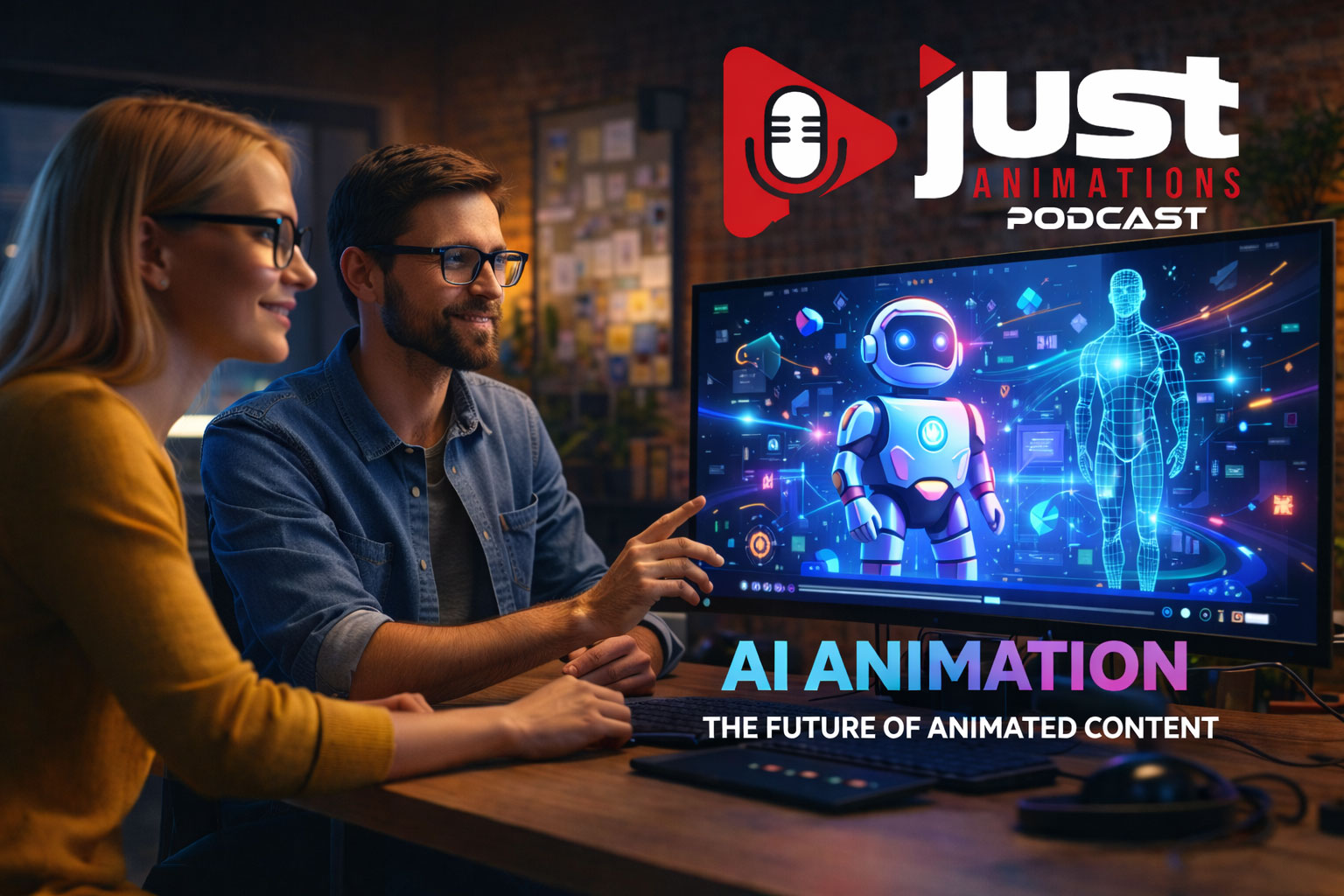
#7 — AI Animation: The Future of Animated Content


In Episode 7 of the Just Animations Podcast, hosts Emma and Jacob explore one of the most transformative developments in the animation industry today: AI animation. This episode takes a practical, grounded look at how artificial intelligence is reshaping the animation workflow—enhancing creativity, improving efficiency, and opening new possibilities for businesses and creators alike.
The episode begins by clarifying what AI animation actually is. Rather than replacing human creativity, AI is being used as a powerful support tool within the animation pipeline. AI-driven technologies can assist with tasks such as character rigging, lip syncing, motion generation, rendering optimization, and even early-stage scene creation. By automating time-consuming technical steps, animators are able to focus more energy on storytelling, design, and creative direction.
A key theme discussed throughout the episode is balance. Emma and Jacob emphasize that the best AI animation results come from combining artificial intelligence with experienced human animators. While AI can accelerate production and help test ideas faster, it still requires creative judgment to ensure animations feel intentional, emotionally engaging, and aligned with brand goals. AI is most effective when it supports creative decision-making—not when it attempts to replace it.
The conversation also addresses an important question: when to use AI animation?
AI animation is particularly valuable for projects that require speed, scalability, or frequent content updates. Marketing campaigns, social media videos, rapid prototyping, and large-scale content production benefit greatly from AI-assisted workflows. It’s also ideal for businesses that need to experiment with multiple styles or variations before committing to a final direction. AI enables faster iteration, making it easier to refine concepts and adapt content across platforms.
Another major advantage discussed is accessibility. AI-powered tools are lowering barriers to entry, allowing smaller teams and businesses to produce high-quality animated content that once required large studios and long timelines. This democratization of animation is creating new opportunities for startups, entrepreneurs, and brands looking to compete visually in crowded digital spaces.
Emma and Jacob also look ahead to where AI animation is heading. Real-time rendering, personalized animated content, interactive experiences, and adaptive visuals are becoming increasingly possible as AI technology continues to evolve. These advancements are paving the way for more dynamic content that responds to users, platforms, and data in real time.
The episode concludes with a forward-looking message: AI animation isn’t the end of creativity—it’s a new chapter. When used thoughtfully, it empowers animators, enhances storytelling, and allows brands to move faster without sacrificing quality.
To explore AI animation projects or learn more, visit JustAnimations.com.