Choosing a California animation studio is less about finding the most famous name in the state and more about matching a production team to the project. California has one of the deepest creative-production ecosystems in the world. Los Angeles and Burbank are strongly associated with film, television, advertising, visual effects, and character animation. The Bay […]
Effective Public sector animation solves challenges which Government agencies, public-sector organizations, and NGOs often face; a communication problem, which private-sector brands often do not encounter in quite the same way: The information is important, but it is not always easy to explain. A new policy may contain dozens of pages of technical language. A public […]
Animation movies are built through a long chain of creative and technical decisions. A finished animated film may look effortless on screen, but the production behind it can involve story development, visual research, character design, storyboarding, voice performance, asset creation, animation, lighting, effects, editing, sound, and final delivery. For audiences, the result is a movie. […]
Visual storytelling in animation is the use of movement, composition, timing, characters, color, camera language, transitions, environments, and visual symbolism to communicate meaning through images over time. A character does not need to say: “I am nervous.” Their eyes can shift toward the door. Their shoulders can tighten. Their hand can hesitate before touching the […]
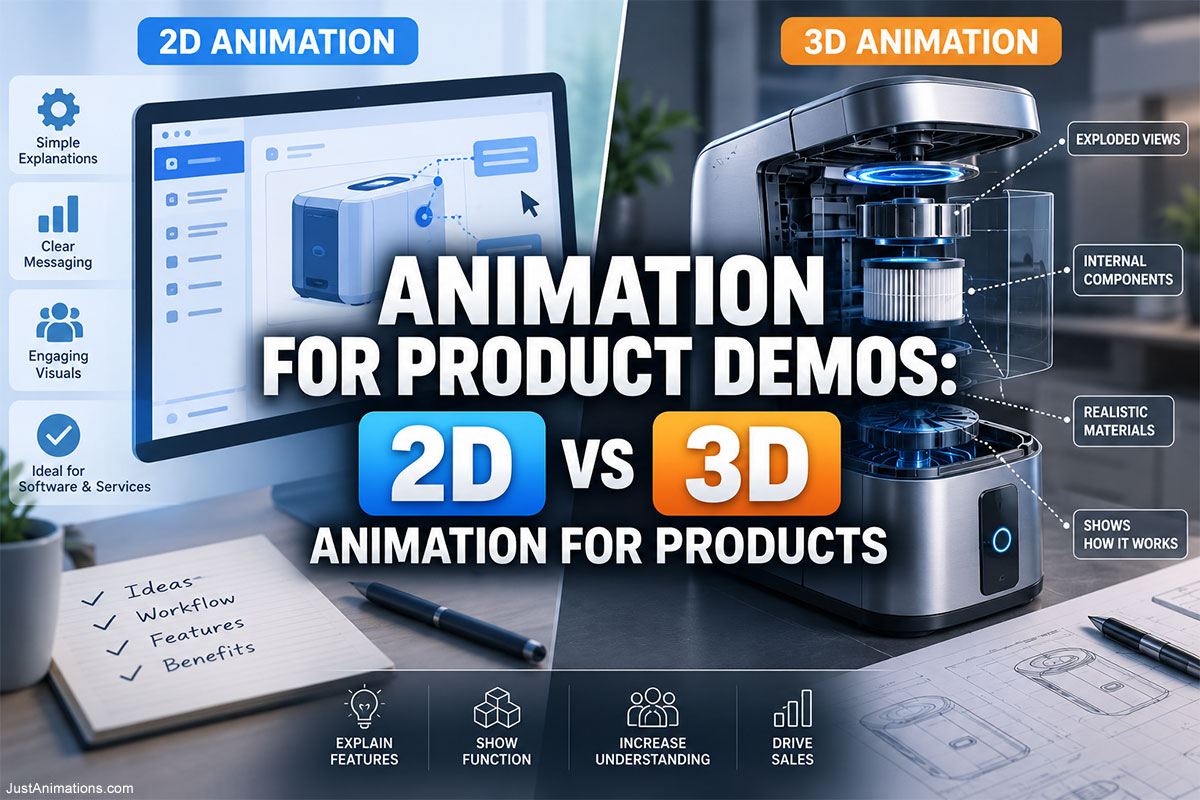
Animation for product demos can show customers what a product does, how it works, what happens inside it, how features connect, and why those features matter—without relying entirely on live-action filming. But there is an important decision to make before production begins: Should the product demo use 2D animation, 3D animation, or a combination of […]
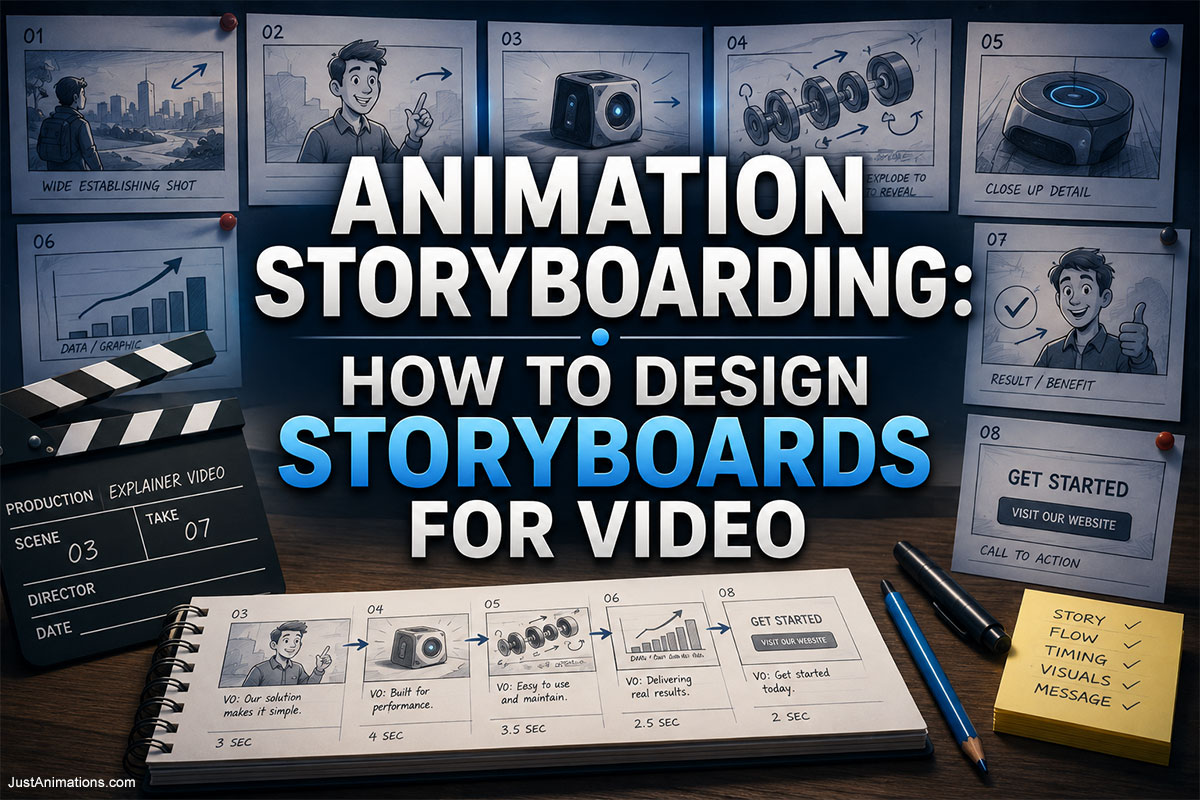
Animation storyboarding is the process of visually planning an animated video before full production begins. Instead of moving directly from a script into finished animation, the production team first creates a sequence of storyboard panels showing: What appears in each shot Where characters and objects are positioned What the camera sees How scenes connect Where […]
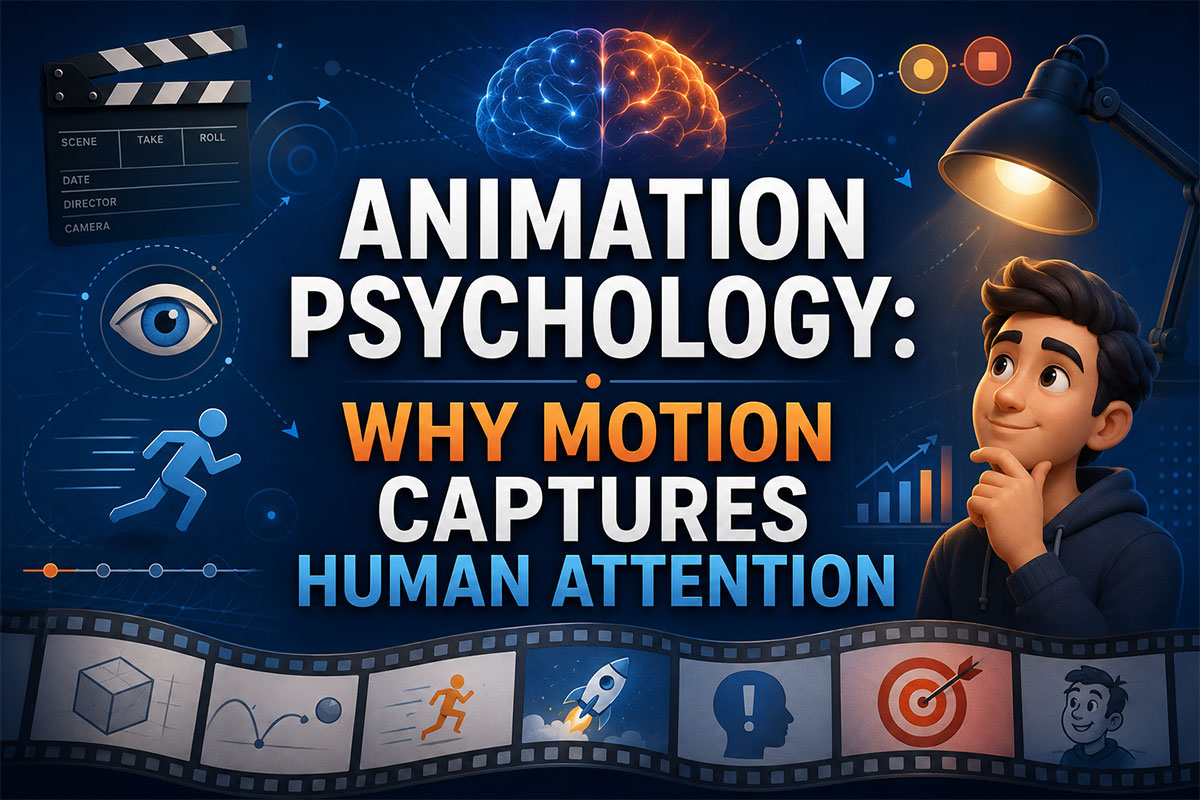
Animation psychology examines how movement, timing, visual change, characters, color, composition, and storytelling influence human attention, understanding, emotion, and perception. Motion is difficult for the visual system to ignore. Something moves. Something appears. A shape suddenly changes direction. A character turns toward the viewer. A product separates into components. Text enters the screen. The eye […]
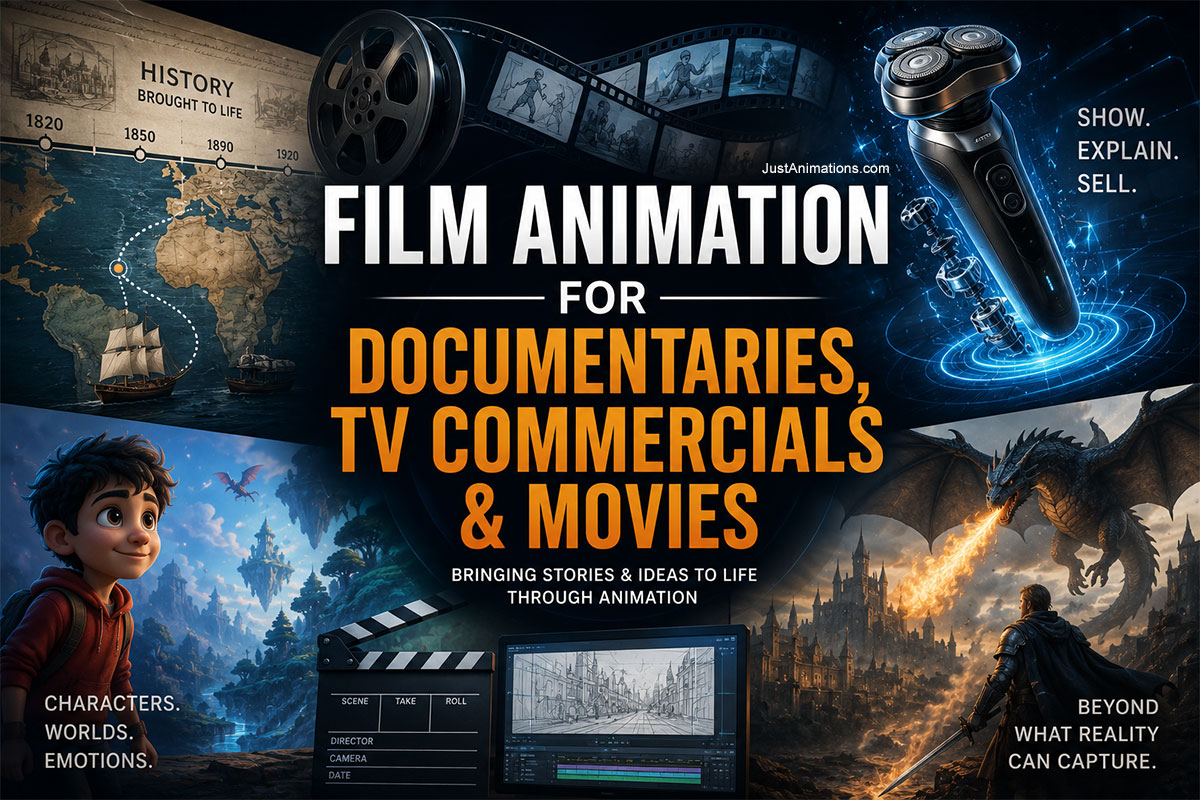
Film animation allows filmmakers, advertisers, documentary producers, businesses, and entertainment companies to create scenes that cameras alone cannot capture. A documentary can reconstruct an event for which no footage exists. A television commercial can transform an ordinary product into a cinematic visual experience. A movie can create an entire world, character, creature, environment, or visual […]
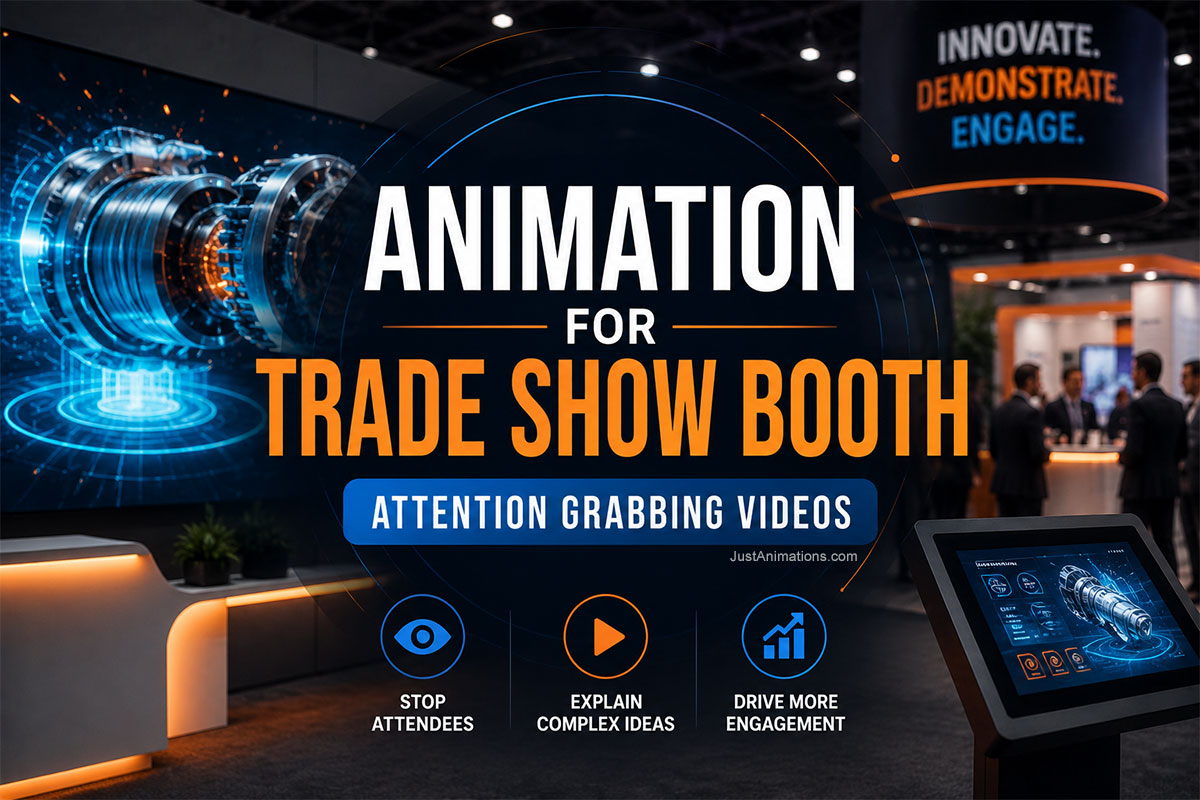
A high quality Animation for trade show booth enables companies to quickly grab attention from the isle or even across the other end of the trade show. A trade show booth may have only a few seconds to earn attention. People are walking. Sales representatives are talking. Competitors have: LED walls Product demonstrations Lights Signage Screens […]
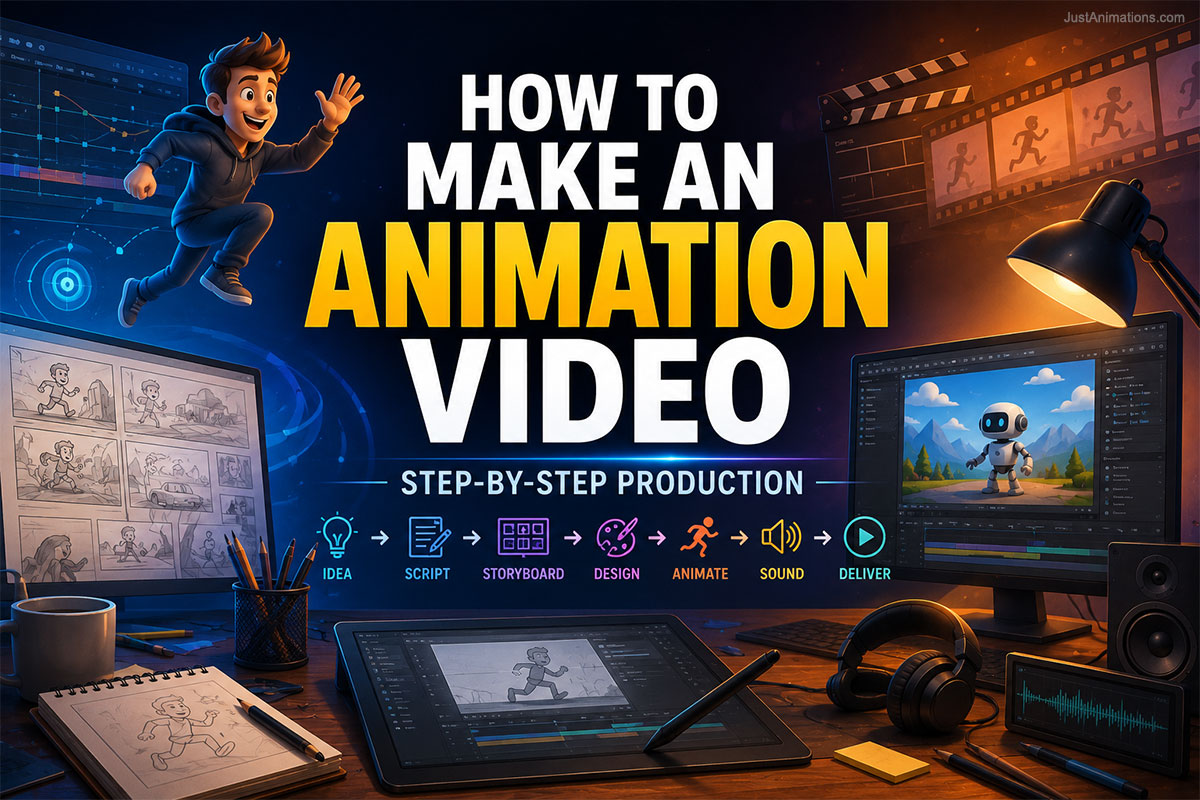
Knowing how to make an animation video starts long before anything begins moving on screen. Professional animation production typically moves through a structured sequence: Goal → concept → script → storyboard → design → assets → animation → sound → review → delivery The exact process changes depending on whether the project is: A 2D […]