



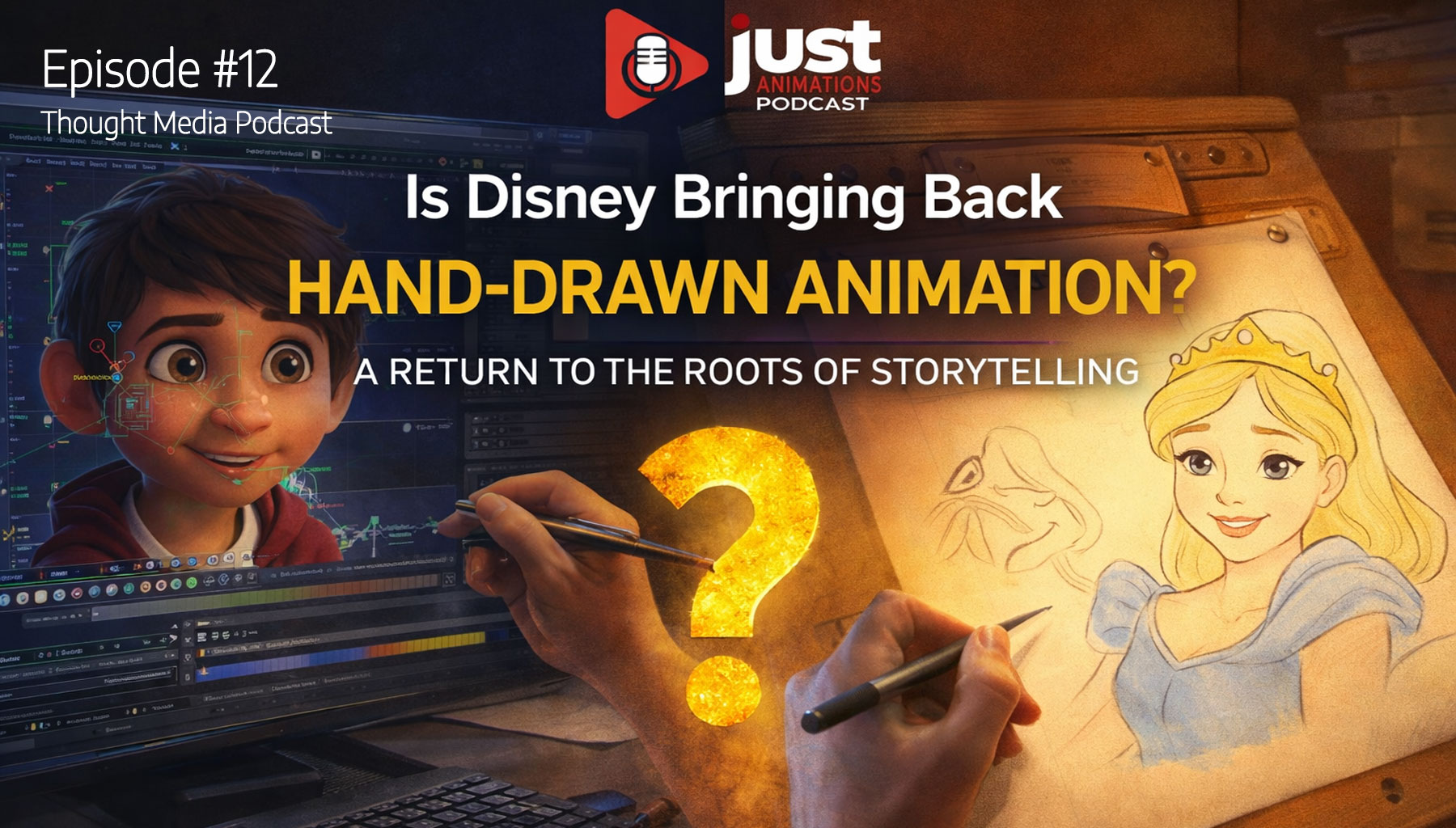
#12 — Is Disney Bringing Back Hand-Drawn Animation


Is Disney Bringing Back Hand-Drawn Animation? A Return to the Roots of Storytelling
For many people, hand-drawn 2D animation and cartoon animation isn’t just a style — it’s a feeling. It represents an era of storytelling defined by warmth, artistry, and emotional depth. Recently, reports have suggested that Disney may be reconsidering the animation style that helped define its legacy, signaling a potential return of hand-drawn animation as a meaningful creative option alongside CGI.
For decades, traditional hand-drawn animation was at the heart of Disney’s identity. Films created frame by frame by skilled artists shaped generations of viewers and set a global standard for animated storytelling. However, as computer-generated imagery advanced, CGI became the dominant format across the industry. It offered scalability, efficiency, and new visual possibilities, leading studios — including Disney — to prioritize digital production pipelines.
Now, industry insiders suggest the conversation is shifting. This isn’t about abandoning CGI or reversing technological progress. Instead, Disney appears to be exploring how hand-drawn animation could once again play a role in modern filmmaking. The motivation behind this shift is rooted in several factors: growing nostalgia among audiences, creative fatigue with overly polished digital visuals, and a renewed appreciation for the craftsmanship that traditional animation represents.
Hand-Drawn Animation’s Human Touch for Characters
Hand-drawn animation carries a unique emotional quality. Every line, movement, and imperfection reflects the presence of an artist. That human touch often creates a sense of intimacy and authenticity that audiences respond to on a deeper level. As viewers revisit classic animated films — or discover them for the first time — there’s a growing realization that not every story benefits from the same visual approach.
Importantly, the goal is not replacement, but balance. CGI excels at scale, realism, and spectacle, while hand-drawn animation shines in expression, mood, and character-driven storytelling. By reintroducing traditional animation into its creative toolkit, Disney could expand the range of stories it tells and how those stories feel.
This potential shift also carries implications for the broader animation industry. A renewed focus on hand-drawn animation would validate traditional skills that many artists have continued to practice despite limited mainstream demand. It could inspire new generations of animators to learn foundational techniques while blending them with modern tools and workflows.
Ultimately, this moment reflects a broader truth about animation: technology should serve storytelling, not dictate it. The future of animation isn’t about choosing one style over another — it’s about using the right medium for the right story. If Disney does move forward with hand-drawn animation again, it may signal a creative renaissance rooted in respect for the past and excitement for what’s possible next.