



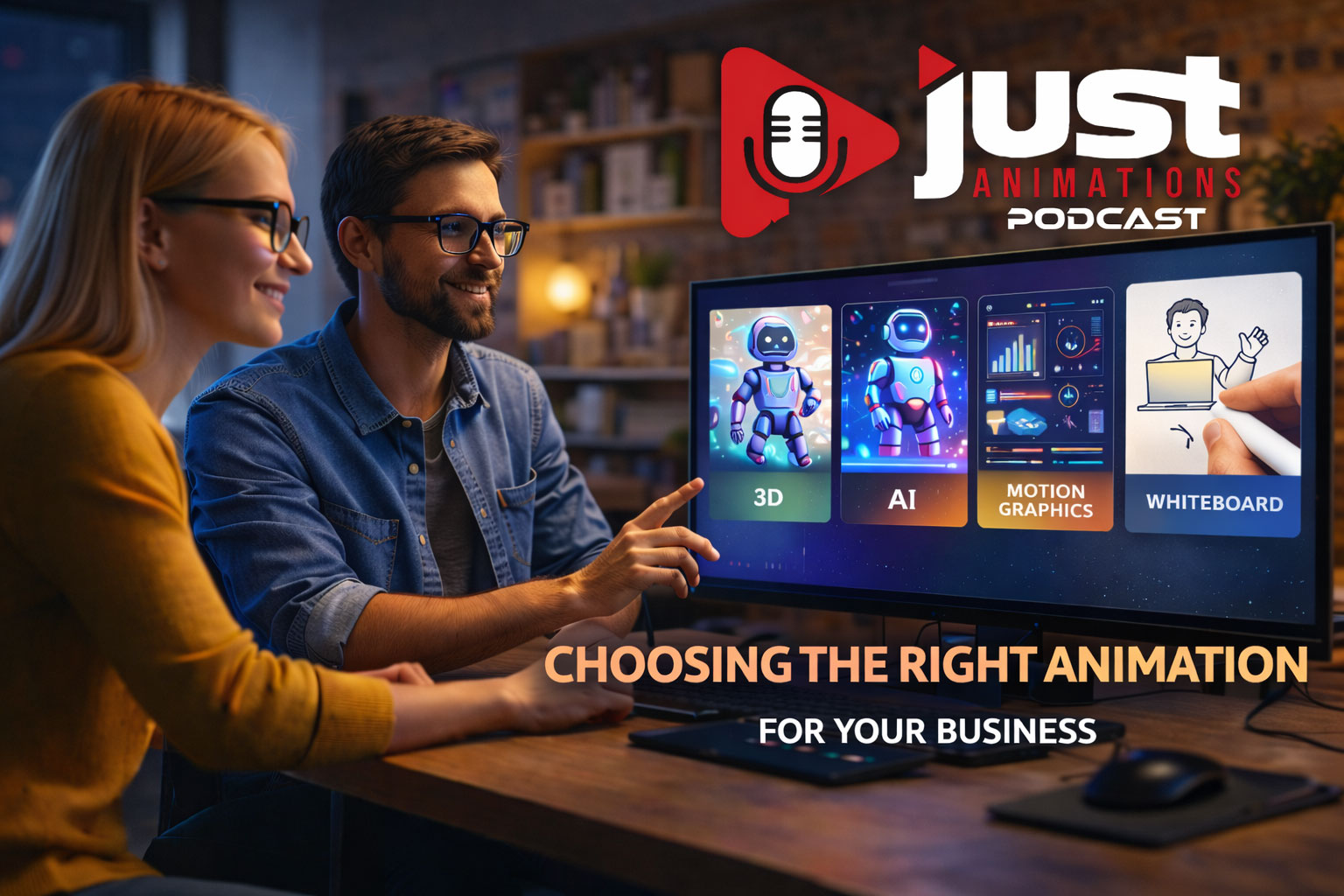
#10 — Choosing the Right Animation Style for Your Business


In Episode 10 of the Just Animations Podcast, hosts Emma and Jacob bring everything together by tackling one of the most common and important questions businesses ask: How do you choose the right animation style? With so many animation options available today, this episode focuses on making strategic, goal-driven decisions rather than choosing a style based purely on visuals.
The episode begins by acknowledging that animation is not one-size-fits-all. The most effective animation style depends on what a business is trying to achieve, who the audience is, and where the content will live. Emma and Jacob emphasize that animation should always support the message—not distract from it. A beautiful animation that doesn’t communicate clearly is far less valuable than a simple one that drives understanding and action.
Throughout the episode, the hosts reference the animation styles already covered in previous episodes of the podcast. These include 2D animation, 3D animation, motion graphics, explainer video animation, logo animation, AI animation, social media animation, and whiteboard animation. Each of these styles serves a different purpose, and understanding their strengths helps businesses make smarter decisions.
A key question explored in this episode is: how do you know which animation style is right for your business?
Emma and Jacob explain that the first factor to consider is your goal. If the goal is education, onboarding, or training, explainer videos or whiteboard animation are often the best choice. If visual impact, realism, or product demonstration is the priority, 3D animation may be the right fit. For fast-paced marketing, presentations, or social content, motion graphics and social media animation work especially well.
Audience is another major consideration. Corporate and enterprise audiences often prefer clean, structured visuals, while consumer-facing brands may benefit from more expressive 2D animation or character-driven storytelling. Platform also matters—what works on a website homepage may not work on social media, and vice versa.
The hosts also discuss practical considerations like budget and timeline. Some animation styles are quicker and more cost-effective, while others require more time and resources. This is where strategy becomes essential. Choosing the right style upfront can save time, reduce revisions, and improve results.
Emma and Jacob explain that at Just Animations, clients are guided through this decision-making process by aligning animation style with business goals, audience expectations, and platform requirements. The best animation isn’t defined by complexity—it’s defined by clarity, relevance, and impact.
The episode concludes by reinforcing that animation is a powerful communication tool when used intentionally. When the right style is paired with the right message, animation becomes a driver of engagement, understanding, and growth.
To get help choosing the right animation style or to explore past episodes, visit JustAnimations.com.