Hand-drawn Cartoons animation helped define Disney’s most iconic era of storytelling.
Before computer-generated animation became the standard, animated films were built through drawing, painting, timing, staging, character acting, and frame-by-frame craftsmanship.
Every movement mattered.
Every expression mattered.
Every background, color choice, and camera move helped shape the story.
That is why classic Disney hand-drawn animation still holds up today.
The visuals may come from another era, but the emotion still works.
The characters still feel alive.
The stories still connect.
And the hand-drawn aniamtion craftsmanship still teaches modern animators important lessons about design, timing, movement, personality, and visual storytelling.
This article looks at seven of the best hand-drawn Disney animated movies, why they matter, what made them technically impressive, and what modern animation studios can still learn from them.
Quick Summary: Best Hand-Drawn Disney Animation Movies
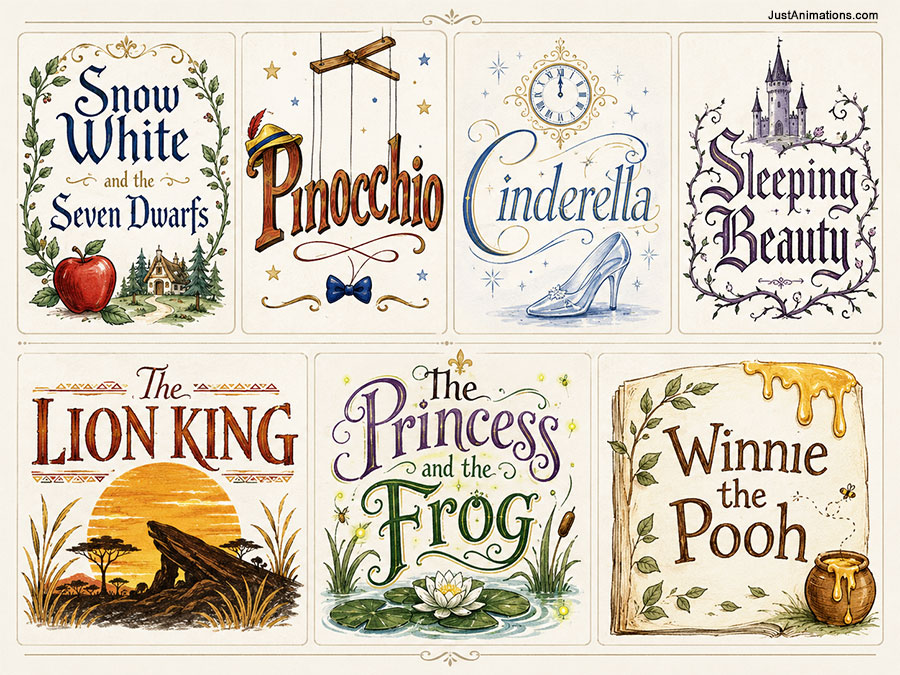
| Rank | Movie | Year | Animation Style | Why It Matters |
|---|---|---|---|---|
| 1 | Snow White and the Seven Dwarfs | 1937 | Classic hand-drawn fantasy animation | First major Disney animated feature and a turning point for animated storytelling |
| 2 | Pinocchio | 1940 | Detailed character animation with advanced effects | Known for water, lighting, perspective, and emotional character work |
| 3 | Cinderella | 1950 | Elegant storybook-style hand-drawn animation | Helped revive Disney’s feature animation success after difficult years |
| 4 | Sleeping Beauty | 1959 | Highly stylized widescreen animation | Famous for bold art direction, medieval design influence, and visual scale |
| 5 | The Lion King | 1994 | 2D animation with digital support | One of Disney’s strongest examples of music, emotion, and epic storytelling |
| 6 | The Princess and the Frog | 2009 | Modern hand-drawn animation | A major return to traditional 2D animation with jazz-era visual energy |
| 7 | Winnie the Pooh | 2011 | Soft classic storybook animation | A gentle tribute to Disney’s traditional hand-drawn style |
What Is Hand-Drawn Animation?
Hand-drawn animation is a traditional animation style where characters, poses, movements, and expressions are drawn by artists across many frames.
In early Disney animation, artists created drawings on paper.
Those drawings were cleaned up.
Transferred to animation cels.
Painted.
Layered over backgrounds.
Then photographed frame by frame.
The final effect created the illusion of motion.
This process required patience, discipline, and extreme attention to detail.
A simple character movement could require dozens of drawings.
A full animated feature required thousands.
That is what makes hand-drawn animation so impressive.
It is not just a style.
It is a craft.
Why Hand-Drawn Disney Animation Still Matters
Hand-drawn Disney films still matter because they built many of the visual storytelling rules that modern animation still uses.
Even today, animators study these films for:
- Character acting
- Facial expressions
- Gesture clarity
- Timing and spacing
- Color design
- Background painting
- Staging
- Emotional storytelling
- Musical integration
- Visual rhythm
- Shape language
- Movement arcs
- Scene composition
The tools have changed.
The principles have not.
Whether a studio is creating 2D animation, 3D animation, motion graphics, cartoon animation, AI animation, or explainer videos, the foundation still comes from classic animation thinking.
Make the pose readable.
Make the emotion clear.
Make the movement feel intentional.
Make the audience care.
Hand-Drawn Animation Styles Explained
Not all hand-drawn animation looks the same.
Disney used different visual approaches depending on the story, era, audience, and artistic direction.
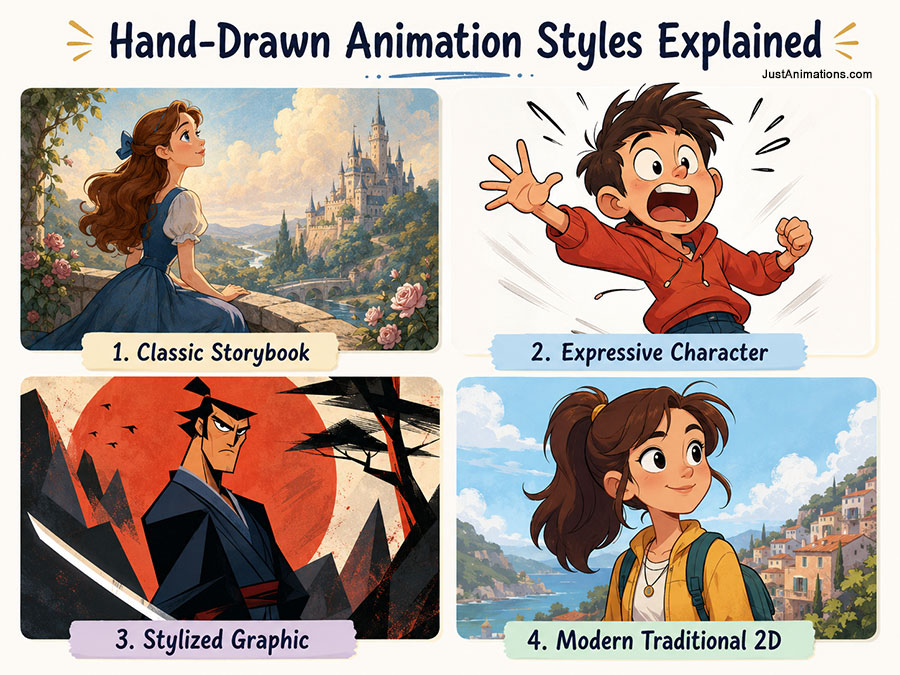
Classic Storybook Animation
Classic storybook animation uses soft colors, elegant character designs, painted backgrounds, and a fairy-tale visual language.
This style is often seen in films like Snow White and the Seven Dwarfs, Cinderella, and Sleeping Beauty.
It works well for fantasy, romance, musical storytelling, and timeless character-driven stories.
Common Traits
- Soft painted backgrounds
- Elegant character movement
- Clear silhouettes
- Fairy-tale color palettes
- Romantic lighting
- Strong use of music and emotion
Expressive Character Animation
Expressive character animation focuses on personality.
Every gesture, facial expression, walk cycle, and reaction helps reveal who the character is.
This is especially important in films like Pinocchio, The Lion King, and Winnie the Pooh.
The goal is not only to make the character move.
The goal is to make the character feel alive.
Common Traits
- Strong facial acting
- Clear emotional reactions
- Distinct movement styles
- Personality-driven poses
- Memorable character timing
- Emotional clarity in every scene
Stylized Graphic Animation
Stylized graphic animation uses bold shapes, design influence, color contrast, and visual structure.
Sleeping Beauty is one of Disney’s strongest examples of this approach.
Instead of trying to make every scene feel soft and rounded, the film uses angular shapes, medieval-inspired design, and wide compositions.
Common Traits
- Bold visual design
- Strong lines and shapes
- Dramatic backgrounds
- Graphic composition
- Stylized characters
- More formal visual structure
Modern Traditional 2D Animation
Modern hand-drawn cartoon animation combines traditional drawing principles with digital tools.
The Princess and the Frog is a strong example.
It uses classic 2D animation principles while benefiting from modern production workflows, digital color, compositing, and effects.
Common Traits
- Traditional character animation
- Digital ink and paint
- Cleaner production workflow
- Modern lighting and effects
- Strong musical pacing
- Contemporary storytelling style
1. Snow White And The Seven Dwarfs
Genre: Fantasy, Musical, Romance
Released: 1937
Animation Style: Classic hand-drawn fairy-tale animation
Snow White and the Seven Dwarfs is one of the most important animated films ever made.
It proved that a full-length animated feature could carry emotion, music, drama, comedy, danger, and character development.
At the time, that was a major creative risk.
The film used hand-drawn animation, character acting, rotoscoping references, painted backgrounds, and multiplane camera techniques to create a sense of depth and atmosphere.
The dwarfs were especially important because each one had a distinct personality.
That character clarity helped audiences connect with them immediately.
Why Snow White Still Matters
- It helped establish feature-length animation as a serious storytelling format.
- It showed that animated characters could carry emotional weight.
- It used distinct personalities to make supporting characters memorable.
- It helped define Disney’s early fairy-tale visual style.
- It showed how music, movement, and character acting could work together.
What Animators Can Learn From It
- Simple character differences can make a cast easier to remember.
- Clear emotional staging matters more than visual complexity.
- Strong silhouettes help characters read instantly.
- Backgrounds can create mood without distracting from the story.
2. Pinocchio
Genre: Fantasy, Adventure, Musical
Released: 1940
Animation Style: Detailed hand-drawn character animation with advanced effects
Pinocchio is one of Disney’s most technically impressive early animated films.
The animation is rich, detailed, and ambitious.
Water effects, lighting, shadows, perspective, mechanical objects, and character movement were handled with remarkable care.
The film also used physical models and reference tools to help artists maintain perspective and consistency.
That gave scenes more depth and believability.
Pinocchio also has a darker emotional tone than many early animated features.
It deals with temptation, fear, consequence, honesty, and personal growth.
Why Pinocchio Still Matters
- It raised the technical standard for hand-drawn animation.
- It showed how effects animation could support story and mood.
- It used detailed environments to create a believable animated world.
- It balanced innocence, danger, humor, and emotional growth.
- It remains a major reference point for visual storytelling.
What Animators Can Learn From It
- Effects animation can make a world feel more alive.
- Lighting and atmosphere can shape emotion.
- Character design should support personality and theme.
- Technical detail works best when it serves the story.
3. Cinderella
Genre: Fantasy, Romance, Musical
Released: 1950
Animation Style: Elegant storybook-style 2D animation
Cinderella is one of Disney’s most graceful hand-drawn films.
It has a softer, more elegant style than Pinocchio or Snow White, with beautiful color design, delicate character animation, and memorable musical sequences.
The film also played an important role in Disney’s history because it helped restore the studio’s commercial momentum after a difficult period.
Visually, Cinderella is known for elegance.
The character designs are clean.
The backgrounds feel romantic.
The transformation sequence remains one of the most memorable magical moments in Disney animation.
Why Cinderella Still Matters
- It helped re-establish Disney’s feature animation success.
- It uses graceful movement and elegant design to support the fairy-tale tone.
- It shows how color and music can shape emotional mood.
- It features one of Disney’s most iconic transformation scenes.
- It remains a strong example of romantic storybook animation.
What Animators Can Learn From It
- Subtle movement can be just as powerful as exaggerated movement.
- Color design can carry emotional tone.
- Magical moments need strong pacing and visual buildup.
- A simple story can feel rich when the execution is elegant.
4. Sleeping Beauty
Genre: Fantasy, Romance, Adventure
Released: 1959
Animation Style: Stylized widescreen hand-drawn animation
Sleeping Beauty is one of Disney’s most visually distinctive hand-drawn films.
The film uses bold shapes, sharp design, medieval influence, dramatic backgrounds, and wide compositions.
It looks different from many earlier Disney films because its art direction is more graphic and stylized.
The use of widescreen presentation gave the film a grander, more cinematic feeling.
Castles feel larger.
Forests feel deeper.
Villains feel more dramatic.
The design of Maleficent also helped create one of Disney’s most visually iconic villains.
Why Sleeping Beauty Still Matters
- It pushed Disney’s visual design into a more stylized direction.
- It used widescreen composition to create scale and drama.
- It combined elegance with strong graphic design.
- It created one of Disney’s most memorable villains.
- It remains a major reference for art direction and background design.
What Animators Can Learn From It
- Stylization can make a film feel timeless.
- Strong background design can define the entire visual identity.
- Villain design should be clear, memorable, and dramatic.
- Composition can make animation feel more cinematic.
5. The Lion King
Genre: Drama, Adventure, Musical
Released: 1994
Animation Style: Traditional 2D animation with digital support
The Lion King is one of Disney’s most successful and emotionally powerful hand-drawn animated films.
It combines classic 2D character animation with large-scale storytelling, unforgettable music, dramatic staging, and emotional themes.
The film explores identity, grief, responsibility, family, legacy, and courage.
It also uses strong visual symbolism, especially in scenes involving Pride Rock, the sunrise, and the contrast between the kingdom’s healthy and damaged landscapes.
The wildebeest stampede sequence famously used digital support to help create scale and movement, blending traditional animation with emerging computer-assisted techniques.
Why The Lion King Still Matters
- It combines emotional storytelling with large-scale visual drama.
- It uses music as a major storytelling tool.
- It features strong character arcs and memorable supporting characters.
- It blends traditional 2D animation with digital production support.
- It remains one of Disney’s most recognizable animated films.
What Animators Can Learn From It
- Emotional themes can make animation feel larger than the medium.
- Music and visuals should work together.
- Environmental design can reflect character emotion.
- Digital tools can support traditional animation without replacing it.
6. The Princess And The Frog
Genre: Fantasy, Romance, Musical
Released: 2009
Animation Style: Modern hand-drawn 2D animation
The Princess and the Frog marked a major return to Disney’s traditional hand-drawn animation style.
It brought back classic 2D character animation while using a modern production workflow.
The film stands out through its New Orleans setting, jazz-influenced music, warm color palette, expressive characters, and cultural specificity.
It also introduced Tiana, Disney’s first Black princess, making the film important culturally as well as artistically.
The animation style feels lively, musical, and theatrical.
Why The Princess And The Frog Still Matters
- It revived traditional Disney hand-drawn animation for a modern audience.
- It introduced an important new Disney princess.
- It used music, setting, and character design to create a distinct identity.
- It combined traditional craft with modern production tools.
- It remains a key example of late-era Disney 2D animation.
What Animators Can Learn From It
- Traditional animation can still feel fresh with the right story and setting.
- Culture, music, and environment can shape visual identity.
- Character ambition and personality should influence movement.
- Modern workflows can support classic animation principles.
7. Winnie The Pooh
Genre: Family, Comedy, Animation
Released: 2011
Animation Style: Soft storybook hand-drawn animation
Winnie the Pooh is a gentle, charming return to classic Disney simplicity.
It does not try to feel massive or technically overwhelming.
That is part of its strength.
The film uses soft hand-drawn visuals, warm humor, simple staging, and a storybook tone that appeals to both children and nostalgic adults.
Its style reflects the softness and innocence of the original Winnie the Pooh world.
The animation is quiet, expressive, and intentionally simple.
Why Winnie The Pooh Still Matters
- It celebrates the charm of simple hand-drawn storytelling.
- It uses softness and warmth instead of spectacle.
- It appeals to both children and adult audiences through nostalgia.
- It keeps the visual tone close to classic storybook illustration.
- It shows that small stories can still be emotionally effective.
What Animators Can Learn From It
- Not every animated film needs massive scale.
- Simplicity can create emotional warmth.
- Soft design can support gentle storytelling.
- Tone matters as much as technical complexity.
Key Innovations In Traditional Disney Animation
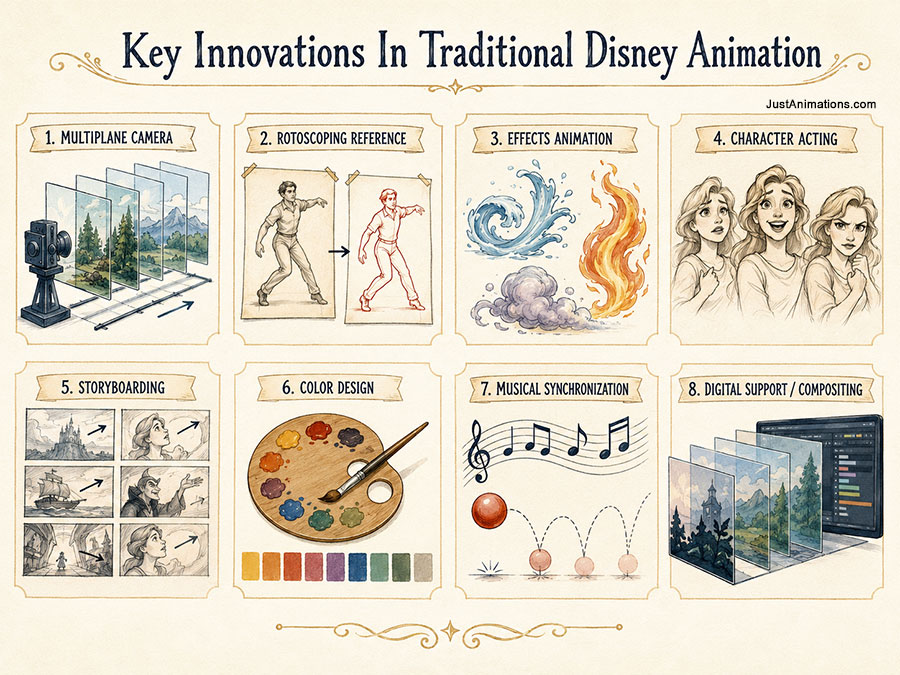
Disney’s hand-drawn films helped shape many techniques that still influence animation today.
| Innovation | Why It Matters |
|---|---|
| Multiplane camera | Created depth by moving layered artwork at different speeds |
| Rotoscoping reference | Helped animators study realistic human movement |
| Effects animation | Made water, fire, smoke, light, and magic feel alive |
| Character acting | Turned drawings into emotional performances |
| Storyboarding | Helped plan scenes, pacing, and visual structure |
| Color design | Supported mood, theme, and character emotion |
| Musical synchronization | Connected movement, rhythm, and emotional beats |
| Digital support | Helped traditional animation handle large-scale scenes |
What Modern Animators Can Learn From Hand-Drawn Disney Movies
Classic Disney films still matter because they teach the fundamentals.
Modern tools can create faster results.
AI tools can speed up parts of the workflow.
3D software can create depth and realism.
Motion graphics can simplify business communication.
But the best animation still depends on the same core principles.
Lessons That Still Apply Today
- Strong characters matter more than complex visuals.
- Clear poses make animation easier to read.
- Timing creates emotion.
- Music can shape the audience’s feeling.
- Backgrounds should support the story.
- Color can guide mood and meaning.
- Movement should reveal personality.
- Simplicity can be powerful.
- Technology should support the story, not replace it.
This is why hand-drawn animation remains important.
It reminds animators that the heart of animation is not software.
It is observation, emotion, design, and storytelling.
Conclusion: Why Hand-Drawn Disney Animation Still Inspires
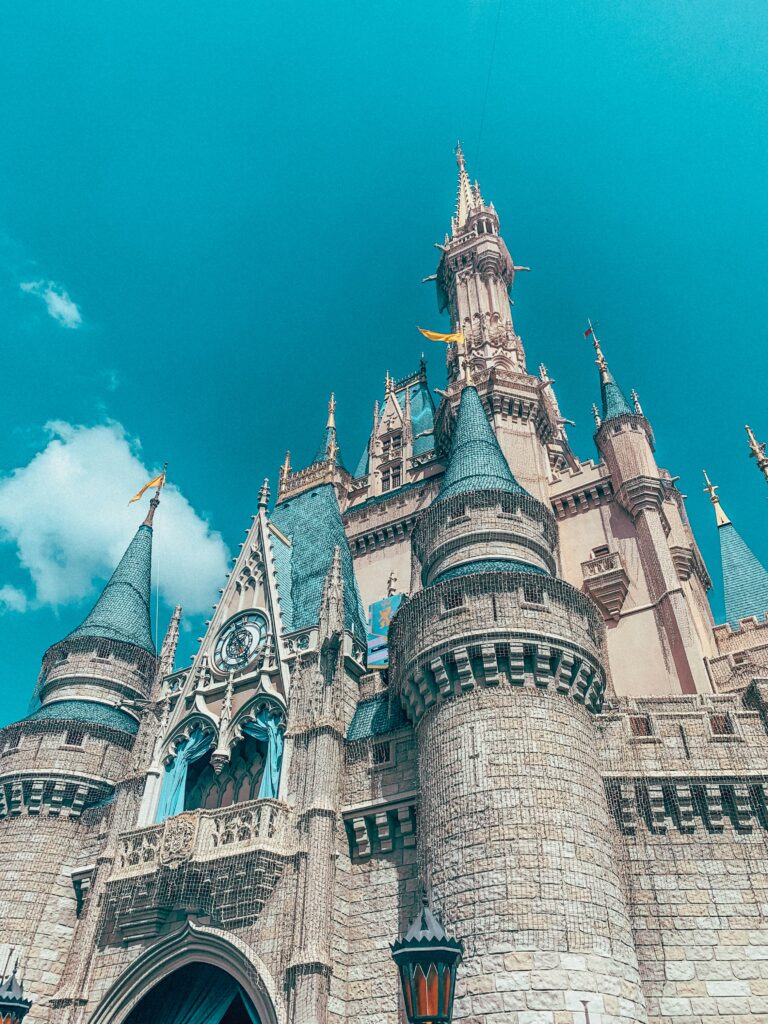
Hand-drawn Cartoons and Disney animation remains one of the most important creative foundations in animation history.
These films were not built with shortcuts.
They were built with drawings, timing, patience, music, color, staging, and character performance.
That is why they still matter.
Snow White and the Seven Dwarfs proved that animated features could carry a full story.
Pinocchio showed how technical craft could create depth and emotion.
Cinderella brought elegance and hope to the screen.
Sleeping Beauty pushed visual design into a bold, stylized direction.
The Lion King showed the full emotional and musical power of 2D animation.
The Princess and the Frog proved traditional animation could still feel alive in a modern era.
Winnie the Pooh reminded audiences that gentle storytelling and simple visual warmth still have value.
Together, these films show that hand-drawn animation is not just an old production method.
It is a language.
A language of movement.
Expression.
Timing.
Shape.
Color.
And emotion.
Modern animation studios can still learn from this tradition, whether they are creating 2D animation, 3D animation, cartoon animation, explainer videos, AI animation, or motion graphics.
The tools may change.
The principles stay the same.
Great animation still needs clear storytelling, strong character design, emotional movement, and visual choices that support the message.
That is why these hand-drawn Disney movies remain timeless.
They are not just classic cartoons.
They are masterclasses in how animation can make audiences feel something.
FAQ
What Is Hand-Drawn Animation?
Hand-drawn animation is a traditional animation method where artists draw characters, poses, and movements frame by frame. These drawings are then sequenced together to create the illusion of motion.
What Are The Best Hand-Drawn Disney Movies?
Some of the best hand-drawn Disney movies include Snow White and the Seven Dwarfs, Pinocchio, Cinderella, Sleeping Beauty, The Lion King, The Princess and the Frog, and Winnie the Pooh.
Why Is Snow White Important In Animation History?
Snow White and the Seven Dwarfs is important because it helped prove that a full-length animated feature could succeed with audiences. It changed the future of animation and helped establish Disney as a major animation studio.
Is The Lion King Hand-Drawn Animation?
Yes. The Lion King is primarily a traditionally animated 2D film, although some sequences used computer-assisted techniques to support complex movement and scale.
Why Is Pinocchio Considered Technically Impressive?
Pinocchio is considered technically impressive because of its detailed character animation, lighting, water effects, perspective work, and emotional storytelling. It remains one of Disney’s strongest examples of early animation craftsmanship.
What Makes Sleeping Beauty Visually Unique?
Sleeping Beauty is visually unique because of its stylized art direction, widescreen compositions, medieval design influence, angular shapes, and highly detailed backgrounds.
Was The Princess And The Frog Hand-Drawn?
Yes. The Princess and the Frog was created using traditional 2D animation principles with modern digital production tools. It marked a major return to Disney hand-drawn animation.
Why Do Hand-Drawn Animated Movies Still Matter?
Hand-drawn animated movies still matter because they teach core animation principles such as timing, posing, staging, character acting, color design, and emotional storytelling. These principles still guide modern animation today.
Is Hand-Drawn Animation Better Than 3D Animation?
Hand-drawn animation is not automatically better than 3D animation. It offers a different look, feeling, and creative style. Hand-drawn animation often feels warmer and more artistic, while 3D animation can offer more realism, depth, and camera movement.
Can Modern Animation Studios Still Use Hand-Drawn Techniques?
Yes. Modern animation studios can still use hand-drawn techniques, either fully or as part of hybrid workflows. Many studios combine traditional drawing principles with digital tools, 3D animation, motion graphics, and AI-assisted production.