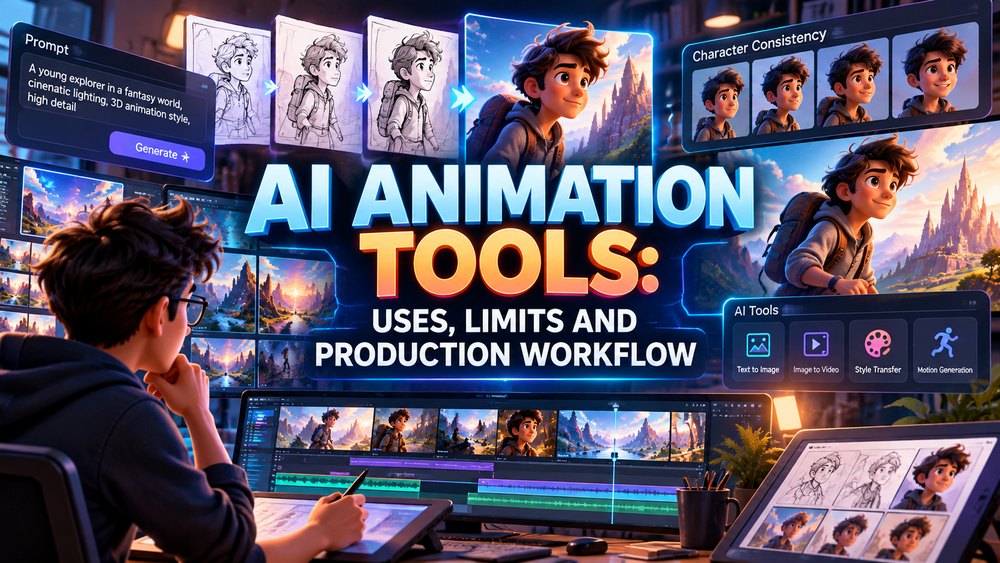
AI animation tools are changing how motion content is planned, generated, revised, and versioned. They can turn text prompts into video, animate reference images, extend shots, generate backgrounds, create motion tests, support storyboarding, and accelerate parts of post-production. But AI animation is not one single tool category, and it is not a replacement for every […]
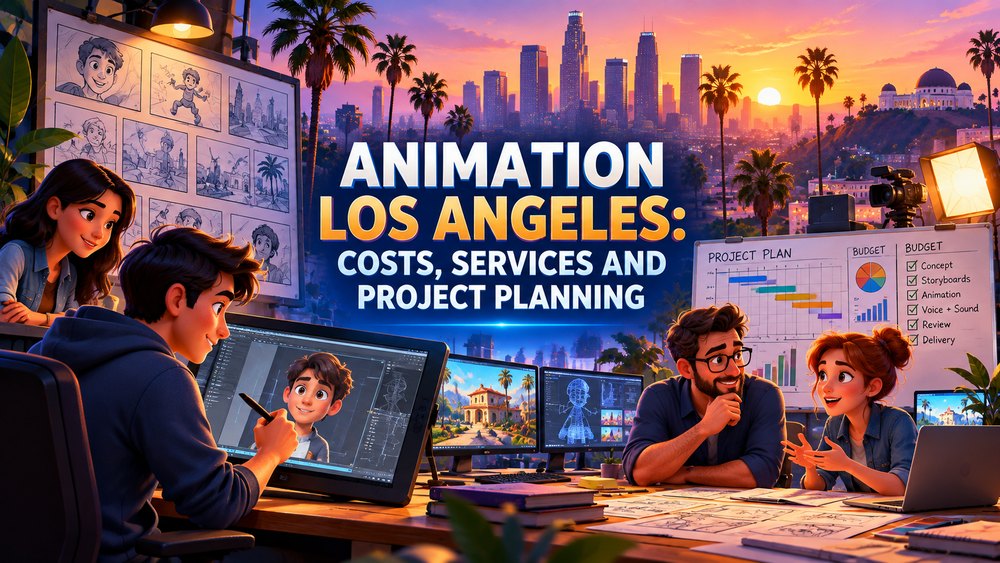
Animation Los Angeles buyers are usually not looking for animation in the abstract. They are trying to solve a production problem inside one of the world’s most competitive creative markets. A Los Angeles company may need: A cinematic commercial A 3D product launch A character-driven campaign A trade-show video A motion-graphics explainer A television or […]
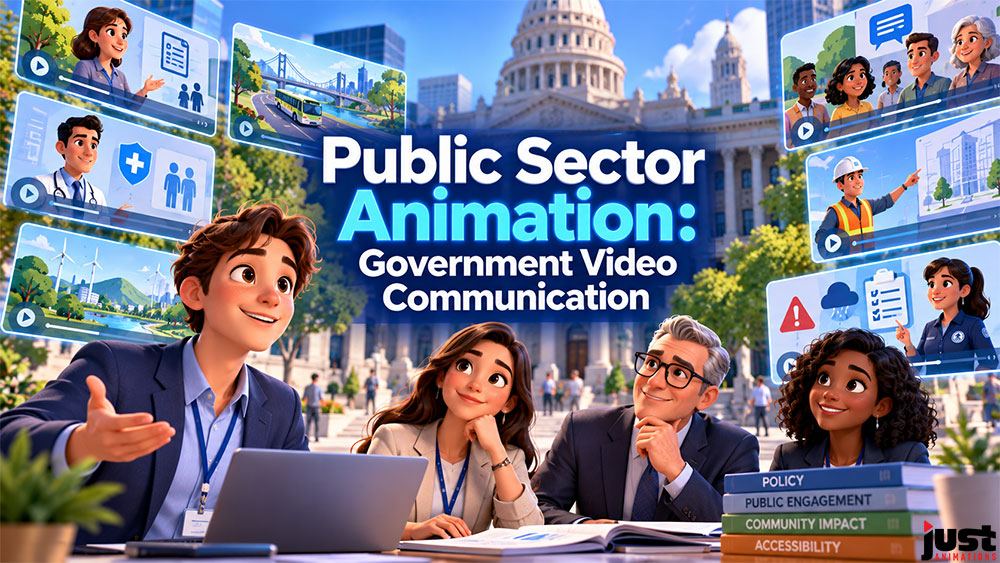
Effective Public sector animation solves challenges which Government agencies, public-sector organizations, and NGOs often face; a communication problem, which private-sector brands often do not encounter in quite the same way: The information is important, but it is not always easy to explain. A new policy may contain dozens of pages of technical language. A public […]
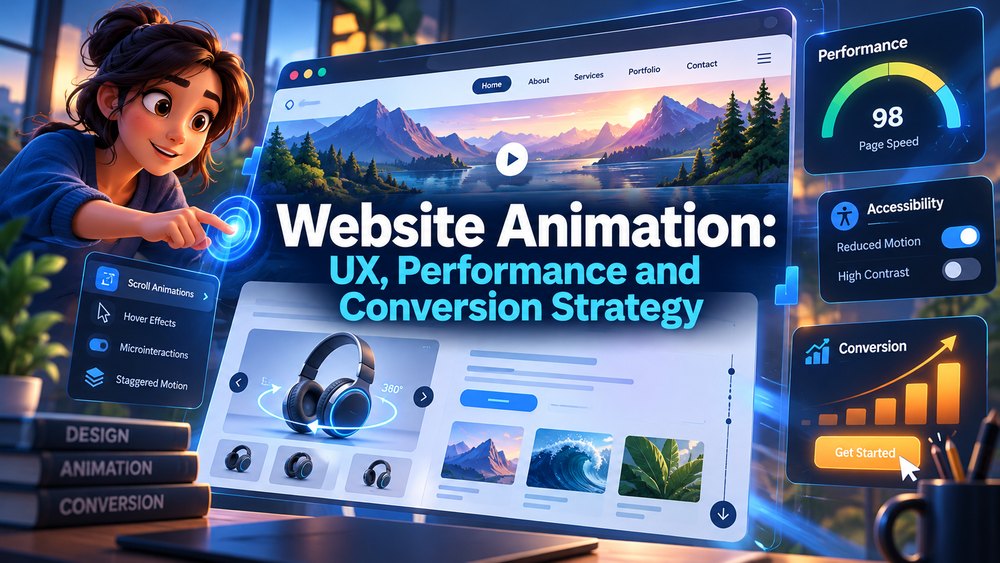
Website animation can make a digital experience easier to understand, more responsive, and more memorable when motion is tied to a clear user goal. It can also slow a page down, distract visitors, create accessibility problems, or make a website feel unnecessarily complicated when animation is added without purpose. That makes website animation a UX […]
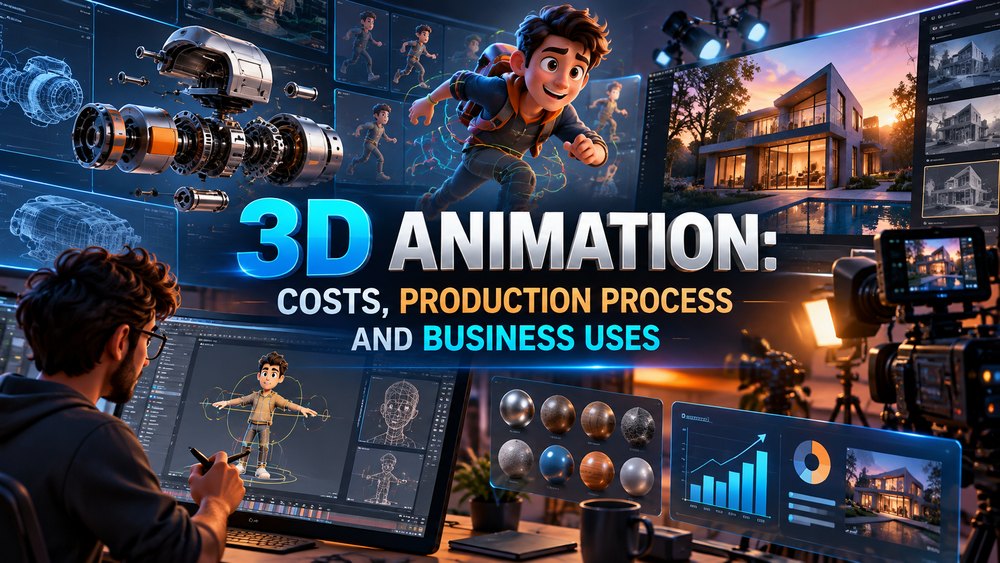
3D animation creates movement in a three-dimensional digital environment. It can show products from any angle, reveal components hidden inside machinery, visualize buildings before construction, create characters and environments, demonstrate medical devices, and turn technical systems into something an audience can actually watch. For businesses, the value of 3D animation is usually not “more realism” […]
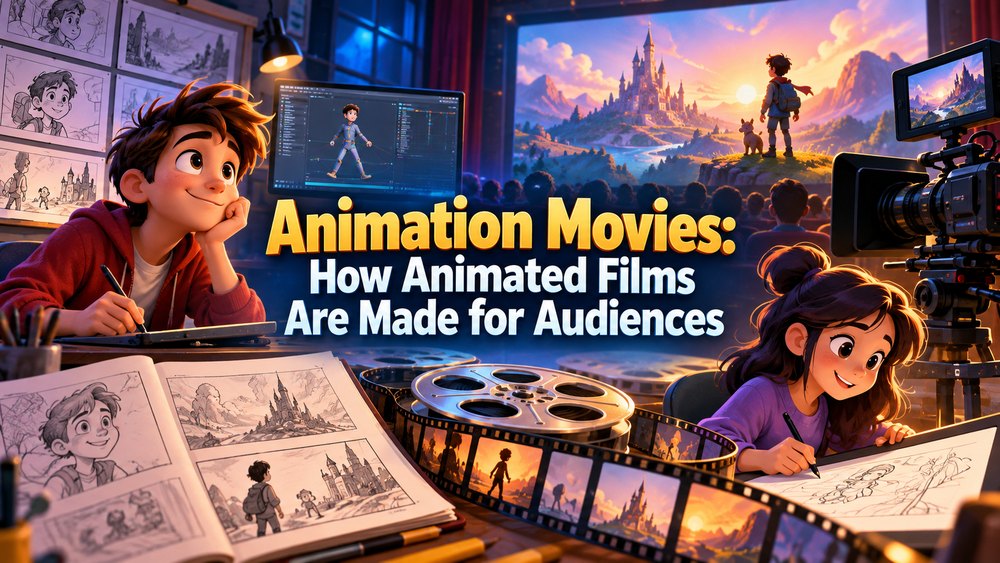
Animation movies are built through a long chain of creative and technical decisions. A finished animated film may look effortless on screen, but the production behind it can involve story development, visual research, character design, storyboarding, voice performance, asset creation, animation, lighting, effects, editing, sound, and final delivery. For audiences, the result is a movie. […]
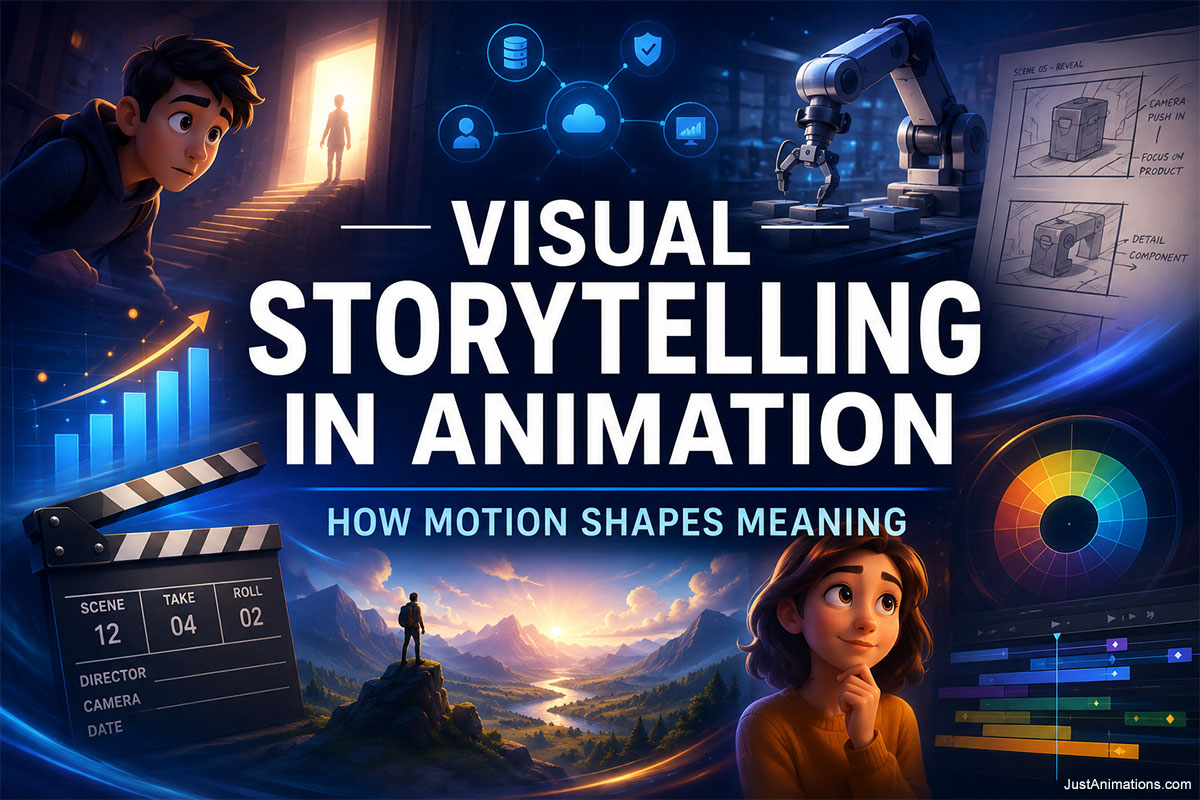
Visual storytelling in animation is the use of movement, composition, timing, characters, color, camera language, transitions, environments, and visual symbolism to communicate meaning through images over time. A character does not need to say: “I am nervous.” Their eyes can shift toward the door. Their shoulders can tighten. Their hand can hesitate before touching the […]
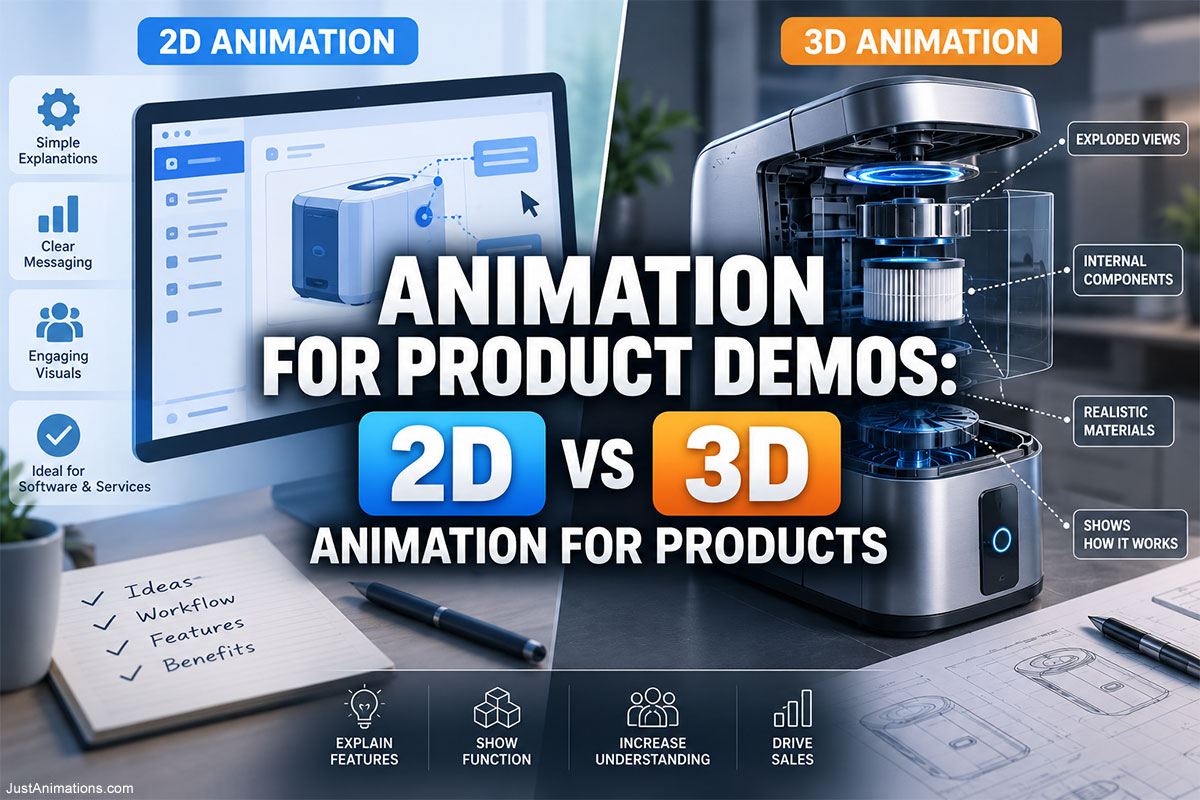
Animation for product demos can show customers what a product does, how it works, what happens inside it, how features connect, and why those features matter—without relying entirely on live-action filming. But there is an important decision to make before production begins: Should the product demo use 2D animation, 3D animation, or a combination of […]
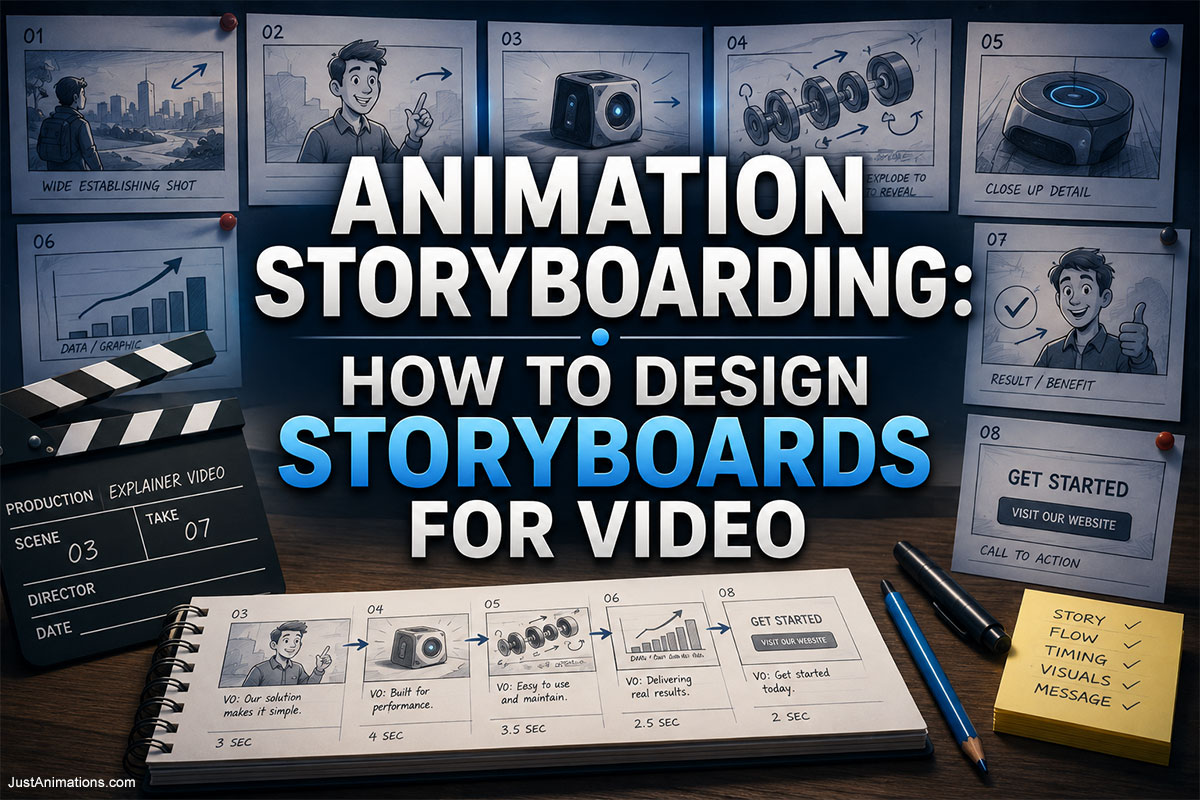
Animation storyboarding is the process of visually planning an animated video before full production begins. Instead of moving directly from a script into finished animation, the production team first creates a sequence of storyboard panels showing: What appears in each shot Where characters and objects are positioned What the camera sees How scenes connect Where […]
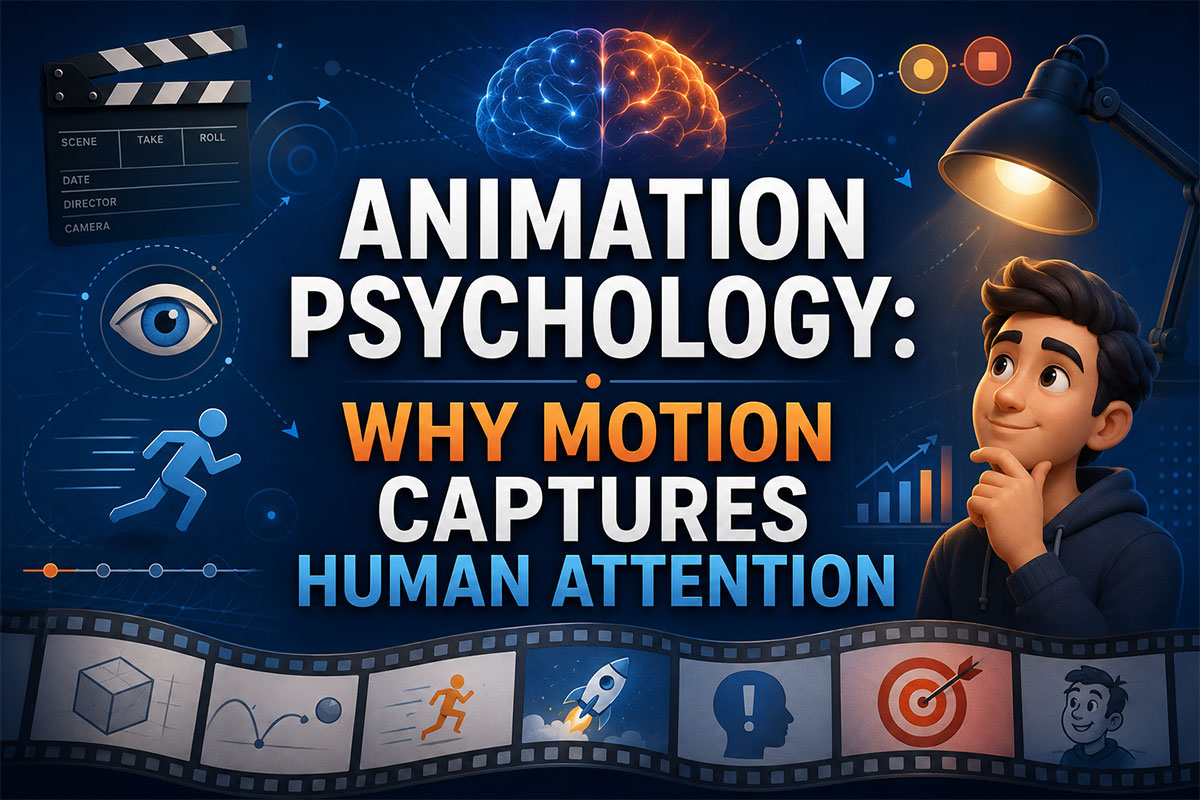
Animation psychology examines how movement, timing, visual change, characters, color, composition, and storytelling influence human attention, understanding, emotion, and perception. Motion is difficult for the visual system to ignore. Something moves. Something appears. A shape suddenly changes direction. A character turns toward the viewer. A product separates into components. Text enters the screen. The eye […]