Animated movies have become some of the biggest theatrical events in the world.
The highest-grossing animated movies of all time now compete directly with superhero franchises, science-fiction blockbusters, fantasy films, video-game adaptations, and major live-action releases.
Several animated movies have earned more than $1 billion worldwide.
One has surpassed $2 billion.
And the current rankings show just how international the animation industry has become.
Today’s most commercially successful animated movies include:
- Mythological fantasy

- Disney sequels
- Pixar franchises
- Video-game adaptations
- Photorealistic CGI
- Musical fantasy
- Superhero animation
- Comedy franchises
The ranking also continues to change as new animated films reach theaters.
Since earlier versions of this list, Zootopia 2 has moved into second place worldwide and Toy Story 5 has entered the top ten.
This updated guide ranks the top 10 highest-grossing animated movies of all time by worldwide theatrical revenue and examines what helped each one become a global box-office success.
For continuously changing theatrical numbers, readers can also review the Box Office Mojo worldwide lifetime box-office rankings.
The Current Top 10 Highest-Grossing Animated Movies
| Rank | Animated Movie | Year | Approx. Worldwide Gross |
|---|---|---|---|
| 1 | Ne Zha 2 | 2025 | $2.27 billion |
| 2 | Zootopia 2 | 2025 | $1.87 billion |
| 3 | Inside Out 2 | 2024 | $1.70 billion |
| 4 | The Lion King | 2019 | $1.66 billion |
| 5 | Frozen II | 2019 | $1.45 billion |
| 6 | The Super Mario Bros. Movie | 2023 | $1.36 billion |
| 7 | Frozen | 2013 | $1.28 billion |
| 8 | Incredibles 2 | 2018 | $1.24 billion |
| 9 | Minions | 2015 | $1.16 billion |
| 10 | Toy Story 5 | 2026 | $1.14 billion |
These figures represent nominal worldwide theatrical grosses rather than inflation-adjusted ticket sales.
Box-office totals can also change slightly through rereleases, late international reporting, and adjustments.
1. Ne Zha 2
Worldwide gross: approximately $2.27 billion
Ne Zha 2 changed the scale of what an animated movie could accomplish commercially.
The Chinese fantasy adventure became the first animated movie to cross the $2 billion worldwide box-office threshold, placing it not only at the top of animation rankings but among the highest-grossing theatrical movies ever released.
The result is especially significant because the overwhelming majority of its theatrical revenue came from outside the traditional North American blockbuster model.
The film continues the story of Ne Zha and Ao Bing while drawing heavily from Chinese mythology and presenting the material through large-scale modern computer animation.
Why Ne Zha 2 Became a Global Phenomenon
Several factors helped drive its success:
✓ Enormous domestic theatrical audience
✓ Existing familiarity with the Ne Zha story
✓ Strong cultural relevance
✓ Large-scale fantasy spectacle
✓ Franchise momentum
✓ Advanced 3D animation
✓ Event-film positioning
Its success also demonstrates something important about the global animation industry:
A record-breaking animated blockbuster no longer needs to originate in Hollywood.
Culturally specific storytelling can become a competitive advantage rather than an obstacle to commercial scale.
That development is particularly relevant as animation studios and creative markets continue expanding outside the traditional U.S. production centers.
At the same time, the United States remains one of the world’s largest animation-production markets, with major creative clusters represented by California animation studios.
2. Zootopia 2
Worldwide gross: approximately $1.87 billion
Zootopia 2 became one of the biggest changes to the all-time animated box-office ranking.
Released in late 2025, the Walt Disney Animation Studios sequel reunited Judy Hopps and Nick Wilde for another mystery inside the enormous animal metropolis of Zootopia.
The original movie had already established:
- Recognizable characters
- A distinctive world
- Detective storytelling
- Comedy
- Social themes
- Broad family appeal
The sequel benefited from all of that existing audience familiarity while expanding the world further.
Why Zootopia 2 Reached the Top Tier
Major advantages included:
✓ Strong franchise recognition
✓ Returning lead characters
✓ Established visual world
✓ Mystery and comedy elements
✓ International appeal
✓ Major theatrical distribution
China was also an exceptionally important market for the film.
Its enormous international performance helped push Zootopia 2 past movies that had occupied the upper end of animated box-office rankings for years.
The movie demonstrates how powerful animated world-building can become.
A successful animation franchise does not merely create characters.
It creates an environment audiences want to return to.
3. Inside Out 2
Worldwide gross: approximately $1.70 billion
Pixar’s Inside Out 2 turned the emotional complexity of adolescence into one of the biggest animated movies in theatrical history.
The sequel returned to Riley’s mind while introducing new emotions including:
- Anxiety
- Envy
- Ennui
- Embarrassment
The brilliance of the original concept remained intact:
Emotions become characters.
Memories become physical objects.
Mental processes become environments.
That gives Pixar a visual framework for turning abstract psychology into a story audiences can actually watch.
Why Inside Out 2 Connected With Multiple Generations
Children can follow the colorful characters and adventure.
Teenagers may recognize the social uncertainty and emotional changes Riley experiences.
Adults can interpret the same behavior from another perspective.
This multi-generational storytelling helped make Inside Out 2 one of the most commercially successful animated films ever produced.
It is also an excellent example of how visual storytelling in animation can turn invisible concepts into understandable characters, environments, movement, color, and visual metaphor.
4. The Lion King
Worldwide gross: approximately $1.66 billion
Disney’s 2019 The Lion King occupies an unusual position in animation history.
Rather than embracing an obviously stylized animated appearance, the filmmakers used advanced CGI and virtual production techniques to create animals and environments designed to resemble wildlife cinematography.
The film combined:
- Famous characters
- Familiar music
- A globally recognized story
- Photorealistic CGI
- Advanced digital environments
- Massive franchise awareness
The result became one of the largest theatrical releases of 2019.
Is The Lion King Really an Animated Movie?
The classification remains debated.
Disney frequently positioned the project as a live-action-style remake because of its photorealistic appearance.
However, most of the visual world and characters were digitally generated.
That makes The Lion King an important illustration of the difference between:
animation technique
and:
animation appearance.
An image can be completely computer generated while intentionally trying not to look traditionally animated.
Businesses and production teams comparing visual approaches can explore our guide to 15 animation styles, including digital 2D, 3D CGI, traditional animation, stop motion, motion graphics, rotoscoping, mixed media, and other techniques.
For projects that require dimensional products, environments, characters, or cinematic visualization, professional 3D animation services can use many of the same fundamental technologies—although at very different production scales from feature filmmaking.
5. Frozen II
Worldwide gross: approximately $1.45 billion
Frozen II entered theaters with something most original animated movies do not have:
An enormous existing cultural phenomenon.
The first Frozen had already created:
- Elsa
- Anna
- Olaf
- Arendelle
- Globally recognized songs
- Major merchandising
- Strong family awareness
The sequel expanded the mythology instead of simply repeating the first movie.
Characters traveled beyond Arendelle while Elsa investigated the origin of her powers.
The movie introduced:
- Enchanted forests
- Elemental forces
- Large water simulations
- New environments
- Expanded mythology
Franchise Momentum Matters
Successful animated movies can continue creating value long after their initial theatrical release.
Characters may extend into:
- Streaming
- Merchandise
- Theme parks
- Games
- Music
- Sequels
- Television
- Short films
- Licensing
By the time Frozen II arrived, audiences already had an emotional relationship with its characters.
The movie did not need to introduce Elsa.
It needed to give audiences another compelling reason to follow her.
6. The Super Mario Bros. Movie
Worldwide gross: approximately $1.36 billion
Few movie characters entered theaters with more existing recognition than Mario.
Nintendo’s Mario universe had already existed for decades across:
- Video games
- Consoles
- Merchandise
- Theme parks
- Television
- Popular culture
Illumination and Nintendo therefore began with extraordinary audience awareness.
But familiarity alone does not guarantee box-office success.
The production still needed to transform interactive game environments into a feature-length animated story.
Why the Mario Adaptation Worked
The filmmakers embraced familiar elements rather than attempting to distance the movie from the games.
Viewers encountered:
- The Mushroom Kingdom
- Mario
- Luigi
- Princess Peach
- Bowser
- Donkey Kong
- Toad
- Mario Kart
- Power-ups
- Question blocks
That created repeated moments of recognition for existing fans.
The Super Mario Bros. Movie demonstrates the commercial potential of adapting major intellectual property through animation when the visual world remains recognizable to the audience that already loves it.
7. Frozen
Worldwide gross: approximately $1.28 billion
The original Frozen remains remarkable because it created the franchise momentum that Frozen II later inherited.
Released in 2013, the movie became much more than a successful animated musical.
It became a worldwide entertainment phenomenon.
Its strongest ingredients included:
- Elsa and Anna
- A sister-centered emotional story
- Musical storytelling
- Memorable environments
- Olaf’s comedy
- Broad family appeal
- Strong visual branding
The movie’s music dramatically extended its cultural reach beyond theaters.
Why Frozen Became More Than a Movie
Successful animated properties are rarely created by one factor alone.
Character animation is important.
Visual design is important.
Music is important.
Story is important.
But the largest franchises often combine these elements into one recognizable experience.
Frozen connected:
characters + story + music + animation + visual identity + merchandising
into a franchise audiences could encounter across multiple platforms.
That combination has helped it remain among the highest-grossing animated movies of all time more than a decade after its original release.
8. Incredibles 2
Worldwide gross: approximately $1.24 billion
Pixar waited approximately 14 years before releasing Incredibles 2.
That unusually long gap created an interesting audience combination.
Children who watched the original movie had become teenagers or adults.
Meanwhile, another generation had discovered the film through television, streaming, and home entertainment.
The sequel therefore appealed to:
- Original fans
- Parents
- New children
- Pixar audiences
- Superhero fans
Animation Allowed the Story to Resume Immediately
One interesting advantage of animated franchises is that characters do not visibly age unless the story requires them to.
Incredibles 2 could begin almost immediately after the events of the first movie even though more than a decade had passed in the real world.
The sequel retained:
- Family dynamics
- Superhero action
- Comedy
- Mid-century design influences
- Familiar characters
while changing the central family roles.
That balance between familiarity and variation helped the movie become one of Pixar’s biggest theatrical successes.
9. Minions
Worldwide gross: approximately $1.16 billion
The Minions began as supporting characters.
Then they became the stars of their own movie.
That makes Minions one of the clearest examples of successful animated character branding.
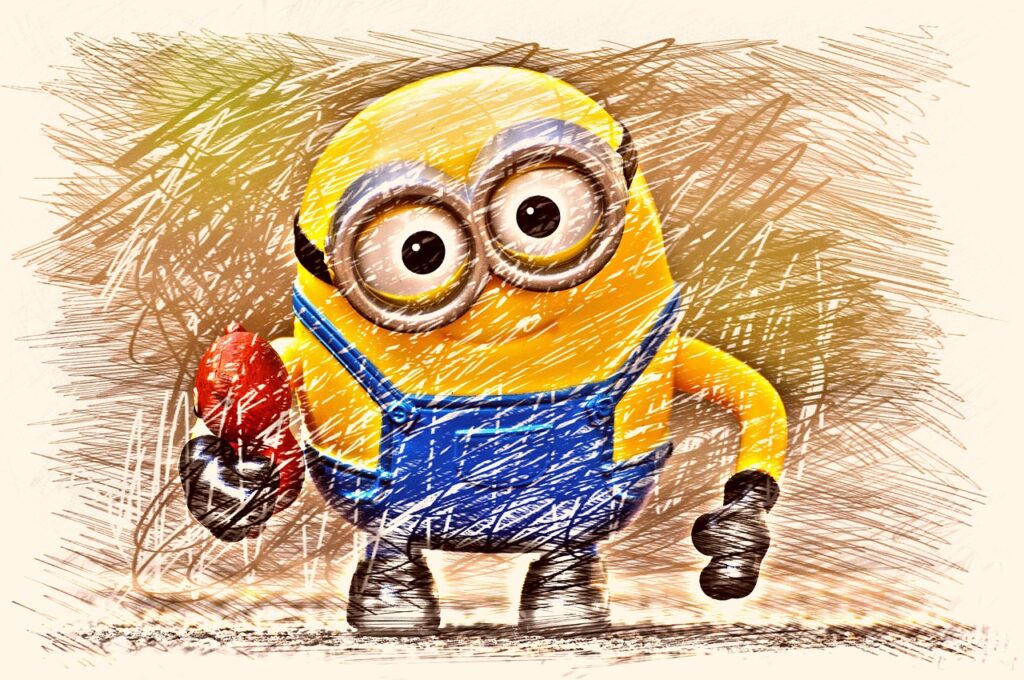 Their design has several major strengths:
- Simple silhouettes
- Distinctive yellow color
- Blue clothing
- Exaggerated motion
- Physical comedy
- Limited dependence on conventional language
A Minion can often be recognized from its silhouette alone.
Its colors are recognizable.
Its movement is recognizable.
Its sound is recognizable.
That is extremely powerful character design.
Why Minions Work Internationally
Physical comedy can cross language barriers more easily than dialogue-heavy humor.
The Minions’ behavior therefore translates particularly well across international markets.
Their commercial reach extended into:
- Sequels
- Merchandise
- Toys
- Games
- Advertising
- Theme parks
- Licensing
This demonstrates how animated characters can become valuable intellectual-property assets far beyond the original film.
Companies and entertainment producers developing character-focused work can use 2D animation services for illustration-driven character storytelling or 3D production when dimensional characters and environments are required.
10. Toy Story 5
Worldwide gross: approximately $1.14 billion
Toy Story 5 is the newest movie to enter the current top ten.
Released in 2026, the movie returned audiences to one of the most historically significant franchises in computer animation.
The original Toy Story arrived in 1995 and became the first fully computer-animated feature film.
More than three decades later, the franchise remains commercially relevant.
Toy Story 5 returned major characters including:
- Woody
- Buzz Lightyear
- Jessie
- Forky
while introducing a contemporary conflict between traditional toys and digital technology.
Why Toy Story Has Remained Relevant
The franchise continually changes the human and cultural environment surrounding its characters.
The toys remain recognizable.
The world around them changes.
That allows each movie to explore another emotional problem while preserving the visual identity audiences already understand.
Toy Story 5’s result also reinforces Pixar’s extraordinary presence in commercial animation.
Pixar now has multiple movies represented among the largest animated theatrical releases.
What Is the Highest-Grossing Animated Movie of All Time?
As of September 2026, Ne Zha 2 is the highest-grossing animated movie of all time based on nominal worldwide theatrical revenue, with approximately $2.27 billion reported globally.
That places it substantially ahead of Zootopia 2 and Inside Out 2.
Its success is particularly significant because it challenges the historical assumption that the world’s biggest animated theatrical franchises must originate from U.S. studios.
Animation has become an increasingly global blockbuster medium.
How Much Does an Animated Movie Need to Make to Reach the Top 10?
The threshold has become extraordinary.
Today, an animated movie can earn more than $1 billion worldwide and still fail to reach the top ten.
Several billion-dollar animated releases now sit outside the current ranking.
That illustrates how dramatically the commercial ceiling for animation has increased.
The billion-dollar animated film is no longer a singular anomaly.
It has become its own category of global entertainment success.
Why Are So Many of the Highest-Grossing Animated Movies Sequels?
Most movies near the top of the ranking are connected to existing entertainment properties.
That is not accidental.
A sequel already begins with:
- Recognizable characters
- Audience awareness
- Established world-building
- Existing fans
- Familiar visual language
- Marketing recognition
The audience already understands what they are buying.
However, franchise recognition alone does not guarantee success.
Successful sequels generally combine:
something familiar
with:
something new.
Zootopia 2 introduces another mystery.
Inside Out 2 introduces new emotions.
Frozen II expands the mythology.
Incredibles 2 changes the family’s superhero roles.
Toy Story 5 introduces digital technology into the toys’ world.
Animation Has Become a Truly International Industry
The top of the box-office ranking is no longer exclusively an American story.
Ne Zha 2 demonstrates the enormous scale of China’s animation market.
Japanese animation and anime have also developed substantial international audiences.
At the same time, the United States remains one of the world’s most important animation-production centers.
California continues to house a major concentration of entertainment studios, production companies, creative talent, and technical expertise.
Readers researching that ecosystem can explore:
Los Angeles remains deeply connected to:
- Film
- Television
- Advertising
- VFX
- Entertainment
- Animation
- Post-production
But the U.S. animation industry extends well beyond Southern California.
New York has developed another substantial creative ecosystem spanning:
- Advertising
- Motion graphics
- Broadcast
- Entertainment
- Design
- Digital media
- Animation production
Our guide to the Top 15 Animation Studios in New York and NYC looks at studios operating across that market.
Why 3D CGI Dominates the Modern Animated Box Office
Most of the current highest-grossing animated films rely heavily on computer-generated 3D animation.
That does not mean 3D animation is inherently superior to 2D.
Instead, several commercial and production trends have aligned around CGI.
Modern 3D animation supports:
- Detailed environments
- Cinematic lighting
- Large action sequences
- Complex characters
- Simulations
- Realistic materials
- Virtual cameras
- Large-scale effects
- Stylized or photorealistic imagery
These tools give filmmakers tremendous flexibility.
A virtual camera can travel almost anywhere.
Characters can inhabit worlds that do not physically exist.
Products and objects can be manipulated in ways that conventional cameras could never capture.
For companies considering the technique outside entertainment, 3D animation services can apply dimensional visualization to:
- Product demonstrations
- Manufacturing
- Engineering
- Architecture
- Advertising
- Healthcare
- Technology
- Trade shows
2D Animation Still Has an Important Role
The commercial dominance of 3D feature films does not mean 2D animation has disappeared.
Far from it.
2D continues to be used across:
- Television
- Streaming
- Advertising
- Explainer videos
- Anime
- Digital media
- Education
- Corporate communication
- Government communication
- Social media
2D can provide:
- Strong graphic identity
- Stylization
- Character expression
- Visual simplicity
- Efficient communication
Professional 2D animation can be particularly effective where concepts, characters, services, software, diagrams, or processes need to be communicated without realistic dimensional visualization.
The correct question is rarely:
“Is 2D or 3D better?”
It is:
“Which visual approach best communicates this particular story?”
Animated Movies Are More Than Theatrical Releases
A successful animated movie can become the foundation for an entire entertainment ecosystem.
Theatrical success may lead to:
- Television series
- Streaming series
- Short films
- Games
- Merchandise
- Theme parks
- Licensing
- Advertising
- Character partnerships
That is why the value of a franchise cannot be measured solely through theatrical revenue.
Some of the world’s most recognizable animated characters have appeared across several generations of media.
Readers interested in long-form animated television can also explore our guide to the Best Animation Series of All Time.
Animated series operate under different production and storytelling conditions from feature films, but they demonstrate the same underlying power of:
- Character
- World-building
- Visual identity
- Long-term audience relationships
Box-Office Success Is Not the Same as Animation Quality
This distinction is important.
A ranking of the highest-grossing animated movies measures theatrical revenue.
It does not objectively measure:
- Artistic quality
- Animation craftsmanship
- Writing
- Innovation
- Historical significance
- Cultural influence
- Critical reception
Some of the most important films in animation history earned far less money than today’s billion-dollar blockbusters.
Older movies also operated under very different conditions.
They faced:
- Lower ticket prices
- Smaller international theatrical markets
- Fewer premium-format screens
- Different distribution structures
- Different marketing environments
This list should therefore be understood as:
a worldwide commercial ranking
rather than:
a ranking of the ten best animated movies ever made.
Why These Rankings Are Not Adjusted for Inflation
Worldwide box-office rankings generally use nominal theatrical revenue.
That naturally favors modern movies because ticket prices have increased significantly over time.
Inflation-adjusted lists can look very different.
Historical titles such as Snow White and the Seven Dwarfs become substantially more significant when ticket values and repeated theatrical releases are taken into account.
Nominal worldwide box office still answers a useful question:
How much theatrical revenue was reported?
But that is different from asking:
How many tickets were sold?
or:
How culturally significant was the movie?
Those require different measurements.
What Businesses Can Learn From Billion-Dollar Animation
A business animation does not need to resemble a feature-length Disney, Pixar, or Chinese theatrical blockbuster.
But many of the same visual principles scale downward effectively.
Create a Recognizable Visual Language
Major animated franchises use consistent:
- Characters
- Colors
- Environments
- Shapes
- Movement
- Typography
Businesses can create similar consistency across videos and campaigns.
Give Characters Personality
Strong character animation helps audiences interpret:
- Emotion
- Intention
- Relationships
- Behavior
Build a Consistent World
Even a short 60-second video benefits from consistency in:
- Lighting
- Perspective
- Design
- Color
- Animation
- Environment
Use Motion to Communicate
Animation should not move merely because movement looks interesting.
Motion can communicate:
- Emotion
- Cause and effect
- Product function
- Scale
- Transformation
- Progress
Make the Central Idea Memorable
Technical quality matters.
But technical quality cannot rescue a concept audiences do not understand or care about.
This is why professional motion picture animation requires both production craft and visual storytelling.
Animation Is No Longer Just “Children’s Entertainment”
One of the most persistent misconceptions about animation is that it represents a genre.
Animation is not a genre.
It is a medium.
Animated productions can be:
- Comedy
- Drama
- Fantasy
- Action
- Science fiction
- Horror
- Documentary
- Educational
- Experimental
- Family entertainment
- Adult entertainment
That distinction is becoming increasingly visible as animation expands across theatrical film, television, streaming, games, advertising, business communication, and digital experiences.
The best animated series demonstrate this particularly clearly because long-form animation now spans audiences from young children to adults.
The Billion-Dollar Era of Animated Movies
The modern box-office ranking is heavily concentrated among relatively recent movies.
That reflects several changes in the theatrical business:
- Higher ticket prices
- Premium formats
- International theatrical expansion
- Larger global marketing campaigns
- Established franchises
- Streaming-era character familiarity
- Wider acceptance of animation among adult audiences
Animation has moved far beyond being treated as a secondary theatrical category.
The largest animated films are now genuine global event movies.
The U.S. Animation Industry Behind the Global Market
Although the current #1 animated movie comes from China, U.S. animation studios remain enormously influential.
Hollywood helped establish many of the technical, production, and commercial systems used by modern feature animation.
California remains especially influential because of its concentration of:
- Film studios
- Animation studios
- Game companies
- VFX studios
- Creative agencies
- Technology companies
Our rankings of the top animation studios in California and Los Angeles animation studios for 2D, 3D and AI animation provide a closer look at the companies operating within that ecosystem.
On the East Coast, the top animation studios in New York City demonstrate the strength of another major U.S. creative market spanning advertising, media, entertainment, design, and commercial production.
What Will the Next Highest-Grossing Animated Movie Look Like?
There is no guarantee that the next record holder will come from Disney, Pixar, Illumination, DreamWorks, or another established American studio.
Ne Zha 2 has already demonstrated that.
Future challengers could emerge from:
- China
- Japan
- The United States
- Europe
- Other international animation markets
They could also come from different source material.
The next phenomenon might be:
- A sequel
- An original story
- A video-game adaptation
- An anime property
- A mythology-based film
- An established television franchise
What matters commercially is whether audiences decide the movie is something they need to experience.
What the Highest-Grossing Animated Movies Tell Us About Animation
Looking beyond the dollar figures, every film in this ranking demonstrates a different strength.
Ne Zha 2 shows the growing commercial power of international animation markets.
Zootopia 2 demonstrates the value of world-building.
Inside Out 2 turns abstract psychological ideas into visual characters and environments.
The Lion King represents the photorealistic extreme of computer-generated filmmaking.
Frozen II demonstrates franchise momentum.
The Super Mario Bros. Movie demonstrates the value of recognizable intellectual property.
Frozen combines music, character, and visual identity.
Incredibles 2 shows how animation franchises can return after long gaps.
Minions demonstrates the commercial power of character design.
Toy Story 5 shows how a successful animated world can continue evolving more than three decades after its creation.
Together, the films show that animation is simultaneously:
Art.
Technology.
Storytelling.
Entertainment.
Intellectual property.
Global business.
The studios, countries, characters, and visual styles may differ dramatically.
But the central principle remains consistent:
Audiences respond when animated characters and worlds give them a compelling reason to care.
Frequently Asked Questions
What is the highest-grossing animated movie of all time?
As of September 2026, Ne Zha 2 is the highest-grossing animated movie worldwide based on nominal theatrical revenue, with approximately $2.27 billion in reported worldwide box office.
What are the three highest-grossing animated movies?
The current top three are Ne Zha 2, Zootopia 2, and Inside Out 2. Each has earned approximately $1.7 billion or more worldwide.
Is The Lion King 2019 considered an animated movie?
Its classification is debated because of its photorealistic visual approach. However, its characters and environments were created largely through CGI and digital production, and it appears within animation and CGI box-office classifications. Rankings that exclude it may therefore produce a slightly different top ten.
Is Toy Story 5 one of the highest-grossing animated movies?
Yes. Following its 2026 theatrical release, Toy Story 5 reached approximately $1.14 billion worldwide and entered the current top ten highest-grossing animated movies.
Are the highest-grossing animated movie rankings adjusted for inflation?
No. This ranking uses nominal worldwide theatrical box-office revenue. Inflation-adjusted rankings can look significantly different because older films were released when average ticket prices were much lower.